AI, Mathematics, and What We Value
October 12, 2026 | 4,946 words | 24min read
Since OpenAI announced a solution to the Navier–Stokes Millennium Prize Problem and subsequently released Math Repo, a collection of hundreds of mathematical results produced with the help of AI, there has been a great deal of discussion on social media.
The reactions seem to fall into two broad camps: (1) this is the coolest and greatest thing that has ever happened, and (2) this is the worst thing that has ever happened. The battle lines are drawn, with tech bros tending toward the first camp and many mathematicians expressing concerns associated with the second. The divide seems so entrenched that, when I looked, I could not find a dedicated thread in the largest mathematics subreddit discussing the hundreds of AI-generated results, because they ban all posts about AI.
I feel that a lot of interesting nuance is being lost in this debate, and I want to try to recover some of it in this article.
To start, I want to use the video below as a starting point. It was uploaded by a mathematician who is frustrated with AI and, as you might expect, falls more into camp (2). I recommend watching it before returning to this article.
I tried to write down the main claims made in the video:
- Job security: She feels that AI threatens her job. If mathematicians were in it for the money, they would join hedge funds. People become mathematicians because they love mathematics.
- Human intelligence: An LLM is not inherently more intelligent than a human. Given enough time, a human could solve the same problems.
- The joy of doing mathematics: She loves solving problems, discovering new things, and struggling toward a solution. AI takes away some of the uncertainty and excitement of that process.
- The pressure to use AI: Mathematics will change, and people will have to use AI, even if they prefer the creativity, journey, and challenge of solving problems themselves.
- The value of mathematics: If its value lies in the results, AI is great. If its value lies in the process, this is a sad development. Mathematics allows us to explore the limits of human ability and collaborate with others.
- Lost opportunities for collaboration: After she made a Computerphile video about a mathematical problem, many viewers emailed her with their attempts to solve it. Now that AI has solved the problem, that shared opportunity for discovery may be lost.
- The frustration of repeated interruption: Imagine someone repeatedly solving difficult problems you have spent months working on. At some point, you just want to tell them to fuck off. They have already proved they can do it. They do not need to keep ruining your experience.
- The benefits of AI: AI could be valuable for scientific research and breakthroughs that change the world. But that does not address what mathematicians themselves value about doing mathematics.
I do not intend to address every argument in the video, only the ones where I think I can contribute something useful.
Before I begin, one note on terminology: throughout this article, I may use anthropomorphic language when talking about AI or LLMs. If a particular term annoys you, replace it with something you think is more appropriate. I do not care much about policing language for its own sake. If I had to defend my usage, however, I would point to the idea of duck typing in programming: if something looks like a duck and quacks like a duck, we treat it as a duck. Similarly, when a submarine moves through water, we routinely say that it is swimming, even though it is a machine that does not move in the same way an animal does. I think this kind of shorthand can be useful when talking about AI, too.
1. Jobs, job security, and the future of mathematics
1.1. Maybe there will be more jobs
One possibility is that AI will actually create more demand for mathematical work. The Jevons paradox describes how improvements in efficiency can increase the overall consumption of a resource rather than reduce it. When something becomes cheaper, people may use more of it.
If mathematical work becomes substantially cheaper, perhaps it will be used more extensively. Organizations might start tackling mathematical problems for which employing a mathematician was previously too expensive. Some applications may become economically viable for the first time, potentially creating new demand for mathematical expertise.
Of course, this is only one possible outcome. Increased demand does not guarantee that the number of jobs will increase. AI can still replace people in particular roles, and some of the new work may require fewer mathematicians than before.
There is also the question of judgment. LLMs make mistakes, and many professional tasks involve choices for which there is no single objectively correct answer.
Consider software engineering. There are different ways to construct a program, different programming languages and frameworks to choose from, and different architectural approaches. There is not always a single correct choice. The same applies to designing a user interface: should it prioritize aesthetics or practicality? Should it be visually elaborate or simple and functional?
These decisions require judgment about trade-offs, requirements, and what matters in a particular situation. A mathematician working with AI may similarly need to decide which problems are worth pursuing, whether a proposed result is meaningful, and whether the solution is trustworthy and useful.
AI could therefore change the nature of mathematical work rather than simply eliminate it. But exactly how that will happen remains uncertain.
1.2. No one has a right to a particular job
There is another point that may be uncomfortable, but I think it is worth stating: nobody has an inherent right to a particular job.
In a capitalist system, employment generally involves an exchange. One person offers their skills and services, and another person decides whether those services are worth paying for. If someone else can perform the same work more effectively or cheaply, the original worker may lose their position.
That does not mean job losses are painless, that employers have no responsibilities, or that society should leave displaced workers without support. It does mean that a particular job cannot be guaranteed forever simply because someone enjoys doing it or has spent years becoming good at it.
If AI changes the demand for mathematical work, mathematicians will face the same problem that workers in other professions have faced when technology changes their industries. It is understandable to worry about this, but the fact that someone loves their job does not mean the world must preserve that job in its current form.
1.3. Do not define your self-worth through your job
A related point is that it is unwise to define your self-worth through your employment or professional abilities.
Jobs can disappear. Careers can end. People can lose abilities they once relied on. If your entire sense of self depends on being good at a particular activity, or on being recognized for doing it, losing that ability or recognition can be devastating.
This is not unique to mathematics or AI. It is a more general problem with tying personal worth to something external that can change independently of you.
None of the previous points means that mathematicians are wrong to feel anxious. The pace of AI development is rapid, and the future is uncertain. It is difficult to know what a profession will look like in five or ten years when its existing practices are changing so quickly.
That uncertainty is frightening. I do not think it is necessary to dismiss that fear in order to recognize that technological change can also create opportunities.
2. Are LLMs more intelligent than humans?
Whether LLMs are more intelligent than humans is not entirely clear. AI already performs better than humans at some tasks and much worse at others.
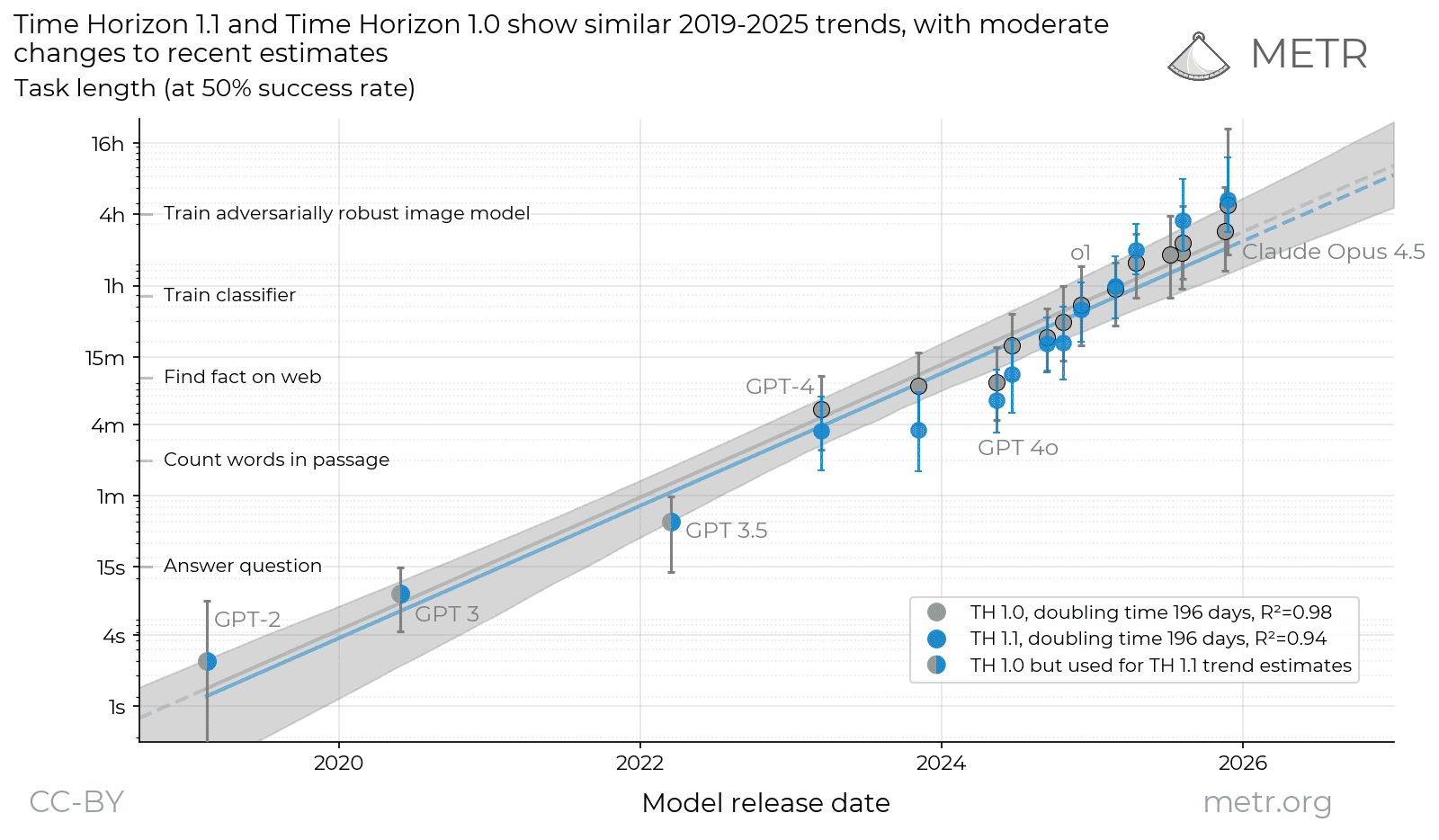
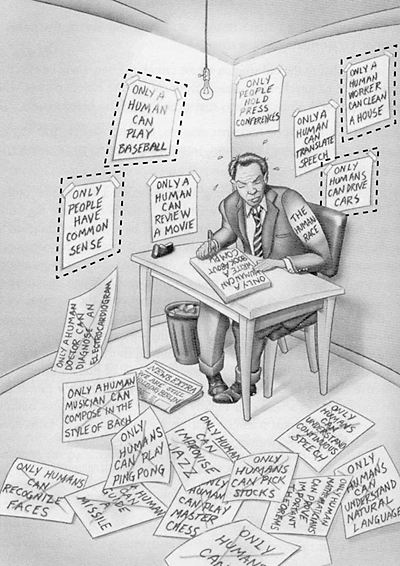
Even if humans are more intelligent than current AI systems overall, what about a year from now? What about ten, fifty, or a hundred years from now? Can we confidently assume that humans will retain some decisive cognitive advantage over machines indefinitely?
I think it is a mistake to make judgments about AI, or about our own worth, depend on the assumption that humans are superior in some particular capability.
In his famous essay All Animals Are Equal, Peter Singer argues against grounding the moral consideration we give to others in the assumption that we share the same capabilities. If equal consideration depended on everyone possessing the same abilities, what would happen when we encountered beings that differed from us in those abilities?
A similar problem arises when we base our self-worth on human intellectual superiority. What happens if we discover that machines can reason better than we can, even in domains that we previously considered uniquely human?
Why should our value depend on the answer?
2.1. The limits of human cognition
Consider the argument that a mathematician could solve the same problem as an LLM if only they had enough time. Perhaps they could. But human beings do not have unlimited time, and our limitations go deeper than that.
We are limited both in how we perceive the world and in how we think about it. Immanuel Kant described the a priori structures of cognition that shape how the world can appear to us. Martin Heidegger explored how our way of existing in the world shapes our understanding and the things that can become intelligible to us.
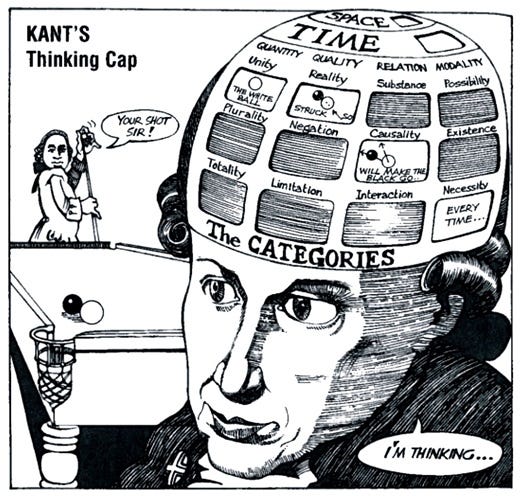
Borrowing Heidegger’s terminology somewhat loosely, our Dasein, our particular way of existing and encountering the world, shapes how we approach problems. Our cognitive structures do not merely determine how quickly we can solve a problem. They also influence which problems we can formulate, which connections we notice, and which possibilities we can conceive of in the first place.
Some things may therefore remain inaccessible to us, even if we devote enormous amounts of time and effort to understanding them.
The same general consideration applies to other forms of existence, whether other animals, hypothetical extraterrestrial beings, or AI systems. Their ways of perceiving, representing, and reasoning about the world may differ from ours. Those differences can shape what they find intelligible.
To understand what I mean, consider the mathematical landscape.
When doing mathematics, we are exploring a landscape of interconnected theorems, definitions, and proofs. But, just as with a physical landscape, not every region is equally accessible to every explorer.
Humans cannot naturally dive thousands of metres into the ocean or survive in lava. Our bodies impose limits on where we can go and what we can experience directly. Other organisms have different limitations. For example, the hadal snailfish can live at depths of around 8,000 metres, in environments that humans cannot explore unaided.
The mathematical landscape may have analogous limits. Our cognitive structures and ways of reasoning could impose natural boundaries on what we can discover, just as our bodies limit the physical environments we can inhabit.
Perhaps we can push those boundaries outward by changing how we perceive and interact with the world through tools. Perhaps we can also push them outward by developing new ways of thinking.
2.2. What counts as an interesting mathematical result?
To make this idea more concrete, consider the fact that mathematicians often prefer solutions that are elegant, beautiful, or aesthetically pleasing. Other solutions, even when correct, may be regarded as ugly or unsatisfying.
These aesthetic preferences are not necessarily arbitrary. Elegant solutions often reveal connections between ideas, reuse familiar structures, and make a difficult result easier to understand. As a result, they may also be easier for us to discover: they fit into ways of thinking that we already understand.
But these preferences also shape what we consider worth exploring. They influence which parts of the mathematical landscape attract our attention.
When we imagine exploring a physical landscape, we might think of climbing the highest mountain, exploring a deep cave, or discovering an unfamiliar region. These are the kinds of things that humans tend to find interesting.
But there is no reason to assume that every form of intelligence would find the same things interesting. For an insect, the space beneath a particular rock might be a hundred times more significant than a mountain. What looks beautiful to us might look ugly to another being, while something we regard as ugly might be beautiful to it.
Our way of existing in the world shapes what we find interesting and worth pursuing. Other forms of intelligence may have entirely different preferences.
When OpenAI’s mathematics repository appeared, I read some of the comments from mathematicians discussing the results. One reaction concerned a paper that began with a dimension of \(10^{200}\), prompting the response, in effect, “What am I even looking at?”
These reactions struck me as illustrative of the point I am trying to make. Some mathematical approaches may be difficult for humans to appreciate because they operate in regions of the mathematical landscape that do not align with our usual intuitions.
Perhaps AI can discover results that humans would never have found, not necessarily because it is smarter, more intelligent, or more knowledgeable than us, but because its way of representing problems, exploring possibilities, and making connections differs from ours.
2.3. Why does the comparison with humans matter so much?
I also think the framing of this debate is often wrong. At times, the reaction seems closer to ressentiment, in a Nietzschean sense, than to a considered intellectual argument.
Results and processes can have value without constantly being compared against one another. Yet much of the discussion seems to revolve around whether AI is better than humans, as though its capabilities would somehow diminish the value of human beings.
I think this comparison sometimes arises from a wishful fantasy that humans must retain some special status.
I wrote about this a while ago in my article Insult to Humanity. The idea that humans possess some unique, superior quality that guarantees our special place in the world is, in my view, a form of naive self-delusion.
The rapid improvement of AI forces people to confront uncomfortable questions about value and meaning that they may previously have been able to avoid. Even before AI, there was the question of what makes human life meaningful and valuable. But as long as there was no machine capable of challenging our perceived intellectual superiority, it was easier to ignore the question.
AI now holds up a mirror to us. That mirror can produce a lot of anxiety.
3. The joy of mathematics and the value of the process
I agree that humans often focus too much on results and outcomes, and that learning to enjoy the process is important (much about my writing is about that, see this and this as example)). However, the rise of AI has not fundamentally changed our ability to enjoy solving mathematical problems ourselves.
At least in a recreational setting, nobody is forcing you to use a tool you dislike. If you enjoy solving mathematical puzzles, exploring ideas, and discovering things for yourself, you can still do all of that by hand.
I remember playing Professor Layton on the Nintendo DS as a child. I loved solving all the different puzzles. In fact, it became a family activity: sometimes my siblings would play, and sometimes my mother would join in.
Every puzzle already had a solution. Did that make solving it any less exciting? I do not think so.
The fact that a solution already exists does not necessarily diminish the enjoyment of finding it yourself. If you genuinely enjoy thinking through a problem, trying different approaches, and gradually working toward a solution, the existence of an answer does not take that experience away from you.
Of course, mathematical research is not identical to solving a puzzle in a video game. Research often involves the possibility of discovering something genuinely new, sharing that discovery with others, and contributing to a collective effort. The release of an AI-generated solution can change those opportunities, especially when a mathematical community has been working on the same problem.
That is a real concern, and I do not think the Professor Layton analogy fully addresses it. But I do think it is important to distinguish the loss of a particular opportunity for discovery from the idea that AI has somehow destroyed the joy of doing mathematics itself.
3.1. I-making and mine-making
I suspect that some of the frustration goes deeper than the loss of an enjoyable process.
When an AI system solves a problem before a human does, it removes the opportunity to say, “I discovered this.” The sense of having made a discovery, of being the person who solved a problem that others could not solve, is no longer available in quite the same way.
This reminds me of the Buddhist concepts of I-making and mine-making: the construction of a sense of self and ownership through identification with experiences and achievements.
The sentiment that AI is destroying the process of mathematics may sometimes conceal an attachment to the idea that I discovered something, that my solution was special, or that I accomplished something others could not.
I do not mean that every mathematician is primarily motivated by vanity, or that the joy of discovery is somehow inauthentic. Genuine curiosity, intellectual ambition, and the desire for recognition can coexist. The point is that the desire to discover something and the desire to be the person who discovered it are not necessarily the same thing.
Before AI-assisted proofs became widespread, mathematicians could say that they had discovered a new lemma or solved a difficult problem. But how independent was that achievement really?
Mathematics has always relied on tools and contributions from others. Researchers use previous papers, calculators, computers, and methods developed by other mathematicians. In combinatorics, computers have been used to rule out large numbers of possibilities and establish results that would be impractical to verify by hand. Proof assistants provide another form of assistance.
None of this makes human mathematical achievement meaningless. It does, however, complicate the idea of a discovery as something produced by an isolated individual through their own unaided ability.
AI is another tool, albeit an extraordinarily powerful one. Its arrival makes the network of assistance behind mathematical work more visible. Perhaps what changes most is not the fact that mathematical discoveries rely on tools and previous work, but how difficult it becomes to maintain the image of the solitary mathematician who discovers something entirely by themselves.
4. Pushing the limits of human ability
Another argument is that mathematics is about pushing the limits of human cognition. It is similar to running a marathon: the point is to discover what human beings are capable of and to push those limits further. It would be absurd to include cars in a marathon, because the purpose of the event is to test human endurance, not to find the fastest way to cover a distance.
I agree with that argument in the context of competition. But I do not think it describes all of mathematics.
We have seen this distinction play out in other fields. Many people remember Garry Kasparov’s famous match against IBM’s Deep Blue in 1997, after which computers became increasingly dominant in chess. Around two decades later, AlphaGo defeated Lee Sedol in Go. In both cases, machines achieved levels of performance that many people had previously considered impossible.
Yet people still enjoy watching humans play chess and Go against one another. We have not stopped caring about human performance simply because machines can outperform us.
The same applies to mathematics competitions. Even if AI can solve problems from the International Mathematical Olympiad, that does not mean people will stop wanting to watch human competitors solve them.
In these settings, the point is not merely to obtain the correct answer. It is to see what people can achieve, to challenge ourselves, and to recognize ourselves in those who push the limits of human ability.
There is nothing wrong with that. We can value human achievement without pretending that machines must be excluded from every other mathematical activity.
The distinction is similar to the one I encounter in running. When I travel across the country to visit my grandparents, I take a car or public transport rather than running there. The purpose is to visit my grandparents, and getting there efficiently is what matters. At the same time, I enjoy running half marathons. On those occasions, I do not take a car, even though it would be much faster, because the purpose is different. I want to exercise, challenge myself, and see what I can achieve.
The appropriate tool depends on the purpose of the activity.
Mathematical competition can be about human performance. Mathematical research, however, is not one giant competition in which humanity must defeat AI to justify its existence.
If research were primarily about pushing the limits of human cognition, the same controversy could have arisen when mathematicians began using computers to establish combinatorial results or proof assistants to verify proofs. Those developments also changed what could be achieved by an individual working alone.
The arrival of AI makes this issue more pressing because of the scale and speed at which it can produce results. But the value of mathematics has never been reducible to the question of whether a human or a machine can solve a problem faster.
It can still be inspiring to hear about Grigori Perelman solving a Millennium Prize Problem and refusing the prize money. His achievement remains remarkable, even if an AI system can solve comparable problems.
5. The purpose of a job versus the tasks it involves
The distinction between the purpose of an activity and the tasks involved in performing it is particularly important when discussing professional work.
I am not a big fan of Nvidia’s CEO, but I think a point he makes about automation in radiology is useful.
The purpose of a radiologist’s job is to help diagnose disease and improve patient care. Studying scans is one of the tasks involved in fulfilling that purpose. Automating the task does not necessarily eliminate the purpose of the job.
~ Ezra Klein Interview
The same distinction applies to mathematics.
A university does not employ a mathematics professor primarily to push the limits of human cognition. The job involves teaching students, conducting research, and advancing the field of mathematics. That is not to say that pushing human limits has no place in mathematics. It clearly does, particularly in competitions. But it is not the sole purpose of mathematical research as a profession.
Imagine a radiologist who refuses to use an AI system that has been shown to identify abnormalities more reliably than they can, simply because they find examining the scans themselves more enjoyable. We would reasonably ask whether that decision was compatible with their professional responsibilities toward patients.
A similar principle applies to mathematicians. Imagine a professor who refuses to use computers or calculators because doing calculations by hand is more satisfying. That might be perfectly reasonable in a teaching exercise designed to develop mental arithmetic. It would be much harder to justify if refusing those tools prevented the professor from fulfilling their professional responsibilities.
The landscape of AI is changing rapidly, and it is not yet clear which tools will become standard in mathematical research. I am not arguing that every mathematician must use AI today. But if using AI eventually becomes a normal and expected part of doing research, refusing to use it solely because one prefers the older process may conflict with the responsibilities of the job.
The same kind of transition has occurred in astronomy. Astronomers once relied much more heavily on direct visual observation to identify celestial objects. Today, telescopes and other instruments generate enormous quantities of data, and algorithms help identify objects and patterns within it. It would be strange for an astronomer to insist on using only their own eyes to discover new stars.
The point is not that every new technology must be adopted immediately. It is that professional work has purposes that extend beyond the personal satisfaction of performing particular tasks. When those tasks change, professionals have to consider how best to fulfil those purposes.
6. Is mathematics too abstract to matter?
One rebuttal to the previous argument is that mathematics differs from other sciences because of how it is used. AI can be applied directly to fields such as physics or medicine, which have obvious practical applications. Mathematics, especially pure mathematics, is different. Its problems may seem completely disconnected from the real world, or so far removed from practical applications that accelerating mathematical research offers little immediate benefit.
I find this argument particularly unconvincing.
It is true that pure mathematics is often further removed from practical applications than applied mathematics or even theoretical physics. Mathematical discoveries can take a long time to become useful, and some may never find a practical application. But mathematics is not disconnected from the world.
Consider the development of calculus, which made major advances in physics possible. Consider graph theory, which has become important in logistics, networks, and scheduling. Or consider Einstein’s theory of general relativity, which relied on mathematical tools developed in differential geometry.
One can debate how much a particular mathematical discovery contributes to the world, and how quickly that contribution appears. What is difficult to deny is that mathematical research has had an enormous impact on other fields and on society more broadly.
However, there is an even more important consideration.
A great deal of mathematical research takes place at universities and is funded directly or indirectly by public money. This creates a form of public accountability. Mathematics professors and other academic researchers are paid, in large part, because society expects mathematical research to contribute to human knowledge and, potentially, to developments that benefit society in the future.
The public does not primarily fund mathematical research so that individual mathematicians can push their own cognitive limits. That may be a valuable personal motivation, but the broader justification for publicly funded research is that expanding mathematical knowledge may produce benefits beyond the immediate experience of the researcher.
None of this means that every mathematical result must have an obvious practical application. Basic research is valuable precisely because its applications are often unknown in advance. Nor does it mean that researchers should abandon intellectual curiosity in favour of short-term results.
It does mean that the claim that mathematics is too theoretical for AI to be useful is a poor argument. The potential benefits of mathematical research do not disappear simply because they may take years or decades to become apparent.
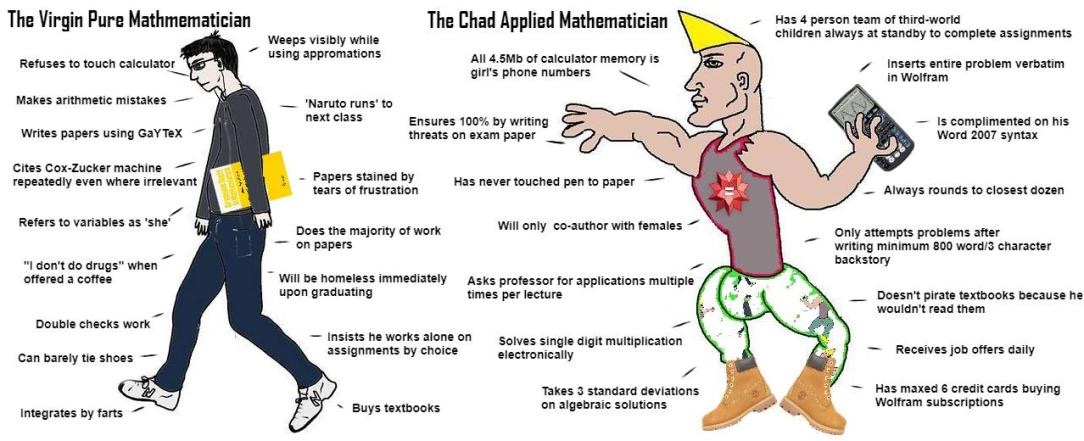
In fact, this argument can sound a little like NIMBY: using AI in other fields is acceptable, but one’s own field is special and must remain untouched. There are people in other professions who enjoy their work and worry that AI will take something away from it, too.
7. Why keep using AI to solve mathematical problems?
One final objection is that using AI to solve one or two mathematical problems might be acceptable, but continuing to solve more and more problems is unnecessary showing off. At some point, the argument goes, AI has already demonstrated its capabilities, and continuing to use it in this way takes something important away from human mathematicians.
I do not find this particularly convincing.
First, the claim that these achievements are important when humans accomplish them but somehow unnecessary when AI does so resembles the kind of species-based distinction that Peter Singer criticizes in All Animals Are Equal. Why should the importance of an achievement depend entirely on whether it was accomplished by a human? If the result itself is valuable, its value does not automatically disappear when a machine produces it.
Second, although I have discussed AI and LLMs throughout this article as if they were a single entity, they are not. New models are constantly being released by different labs, including Anthropic, OpenAI, DeepSeek, Mistral, and Z.ai. Each new model needs to be evaluated to understand what it can and cannot do.
One difficulty with existing AI benchmarks is that they can become saturated or contaminated. A model may have encountered benchmark questions or very similar material during training, either deliberately or incidentally. This makes it difficult to determine whether a strong score reflects genuine generalization or familiarity with the material.
Mathematics provides an interesting way to evaluate these systems. There are many open problems for which no accepted solution is known, so a genuinely new result can provide evidence of a model’s capabilities beyond its performance on familiar benchmark questions.
Furthermore, where a formal proof is provided, it can often be checked using a proof assistant such as Lean. This does not automatically establish that the problem is important, that the formalization captures the intended mathematical claim, or that the result will be useful. But it offers a way to verify mathematical correctness that is unavailable for many other kinds of open-ended task.
This is one reason that solving previously unsolved mathematical problems is valuable for evaluating AI systems. The point is not simply to show off. It is to establish what current models can achieve, identify the limits of their capabilities, and compare those capabilities with those of earlier systems.
There is also a separate question about how AI companies should publish their results. Mathematicians have legitimate reasons to care about transparency, attribution, independent verification, and the effect of mass releases on academic research. Those concerns deserve to be taken seriously. But they are arguments about how mathematical AI research should be conducted and communicated, not arguments for stopping the evaluation of AI systems altogether.
Conclusion
Thats it. Make of this what you will.

 reply via email