In Defense of Hating Things
November 1, 2026 | 993 words | 5min read
I had an interesting conversation with a friend of mine. I told him that I like to hate things, and he was of the opinion that this is bad and that instead we should let things go and not waste energy on them.
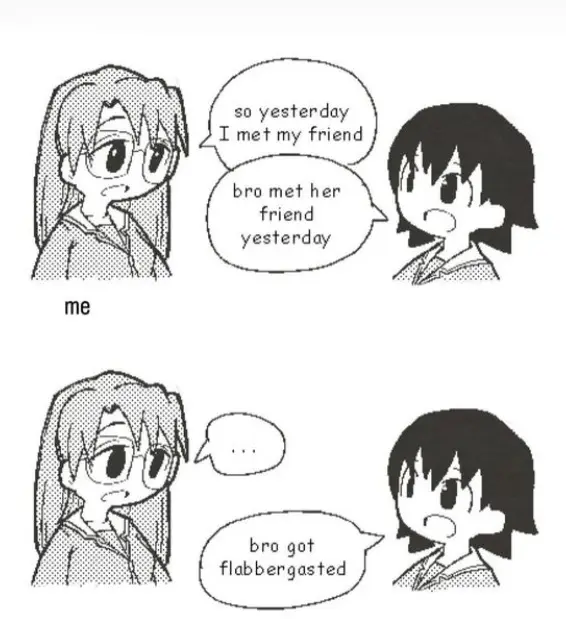
Here is my reasoning.
When we talk about the quality of an experience, be it watching a movie, reading a book, eating food, or watching sports, I think there is a common misconception about how we rank experiences. The usual hierarchy seems to be:
Something good, e.g. a masterpiece of a film or something truly delicious. Something average, e.g. an average film or forgettable food. Something bad, e.g. a film that is actively bad or a terrible book.
However, I think this hierarchy is wrong. It should instead be:
Something good. Something bad. Something average.
In other words, the worst thing that can happen during an experience is not that the experience is bad, but that it is average and forgettable.
Why is this the case? Let’s take the example of a book. If I truly enjoy the book, maybe I discover new ideas in it, or perhaps a character arc is executed masterfully. I enjoy it, and it stays in my head. On the other hand, if the book is average, I continue reading without really caring about what is happening, with a kind of apathy, and ultimately have nothing to say about it.
But if the book is bad, I can say so much about it. I can criticize various decisions the author made, lament its lost potential, and so on. What is common to the first and third experiences is that in both of them I feel passion and emotion, while in the second, those emotions are absent.
To summarize, a bad experience can be better than an average experience because it is hateable, and this has two advantages:
It leads to more interesting conversations with others. If something is average and we have a conversation about it, one might simply say, “It was okay.” There isn’t much more to say, and this is boring. Even without others, it can be more fun. Getting angry can be kind of fun.
Another clarification needs to be made here. When I say hating, I mean something very specific. I mean intentionally redirecting negative energy towards things that don’t really matter, but that also kind of do.
An example of this is ragebaiting. The idea behind ragebait is that one person puts out something very outlandish, and other people who see it think that it is obviously false and engage with this person. The pleasure for the ragebaiter comes from people genuinely trying to convince them that their argument is false, while the ragebaiter knows that they will never change their mind because it wasn’t really their opinion in the first place.
When I talk about hating, I mean something similar from the other side. You get ragebaited, recognize that this is happening, and have two options: disengage, which is boring, or deliberately engage with the ragebait and ragebait back, in some sense.
This is not necessarily being trapped by the ragebait, because the element of deception that is usually necessary for this to happen is absent. You know what’s going on, and you choose to participate anyway.
When someone is genuinely annoyed, angry, or negative in some way, and then hates something, that is not really what I am talking about. That kind of negativity spreads further negativity. What I am talking about is small things that don’t really matter, like how good a book was or someone’s opinion about a particular food, and then dispassionately hating them with passion.
For example, I love to hate on soups as a meal. I don’t think they make for a good meal. When I want to eat, I want something solid, and when I want to drink, I want to do so separately. I don’t need some meal that combines the two. So I love to hate on soups, and I enjoy feeling that passion arise in me, while at the same time not really caring about the subject itself.
What is important here is this intentional use of negative energy.
Now, the broader point. I think this is more generally about how we react when negativity appears in our lives. Broadly speaking, there are two ways to react: the Buddhist way and the Nietzschean way.
The first is to accept things equanimously and let them go, while the second is to use the energy for something “productive.”
What I think is best for a good life is to combine these two approaches. That is, use the Buddhist approach for things that genuinely bother you, such as the loss of a loved one, getting fired from a job, and so on. For these things, it is better to accept what has happened and not allow yourself to be consumed by negativity.
Then, use the Nietzschean approach for smaller things that you don’t really care about but kind of do, and use that negativity to make life more interesting.
I wonder if these two approaches can be reconciled.
Ultimately, I think this comes down to how we approach emotions more generally. We often assume that positive emotions are good and negative emotions are bad, and therefore try to maximize the former and minimize the latter. But this is too simplistic. Perhaps what matters more is not whether an experience is positive or negative, but whether it makes life more engaging and interesting. In this sense, deliberately hating something trivial can be understood as a form of play: we take something that would otherwise be an unpleasant experience and turn it into an opportunity for enjoyment. The point is not to be negative for the sake of negativity, but to recognize that even negative emotions can be something we play with and enjoy, rather than something we always have to avoid or overcome.

 reply via email