- Vegetarian(-ish) Ground Meat
Here’s a fun recipe for making some kind of vegetarian(-ish) ground meat.
For the base, get some jackfruit, ideally already in dried, minced form. If you’re using dried jackfruit, cook it in water for about 2 minutes, using roughly five times its weight in water. I recommend not using plain water, but adding some premade vegetable stock and/or chicken or meat stock (though obviously, that makes it non-vegetarian).
After that, drain the jackfruit, squeeze out some of the excess water, and put it in a pan with some oil. Fry it until it starts to brown. Then add some tomato paste and miso paste(adds umami), and cook for another minute or so.
Finally, add the spices: plenty of paprika, some onion powder, garlic powder, soy sauce, salt (be careful with that), black pepper, thyme, and marjoram. I’ve also experimented with adding a little apple juice to give it a bit more sweetness. You can also add bit of butter.
I’ll probably keep experimenting with this recipe. I bet this can be used in combination with wraps or tacos.
- I made an Burger
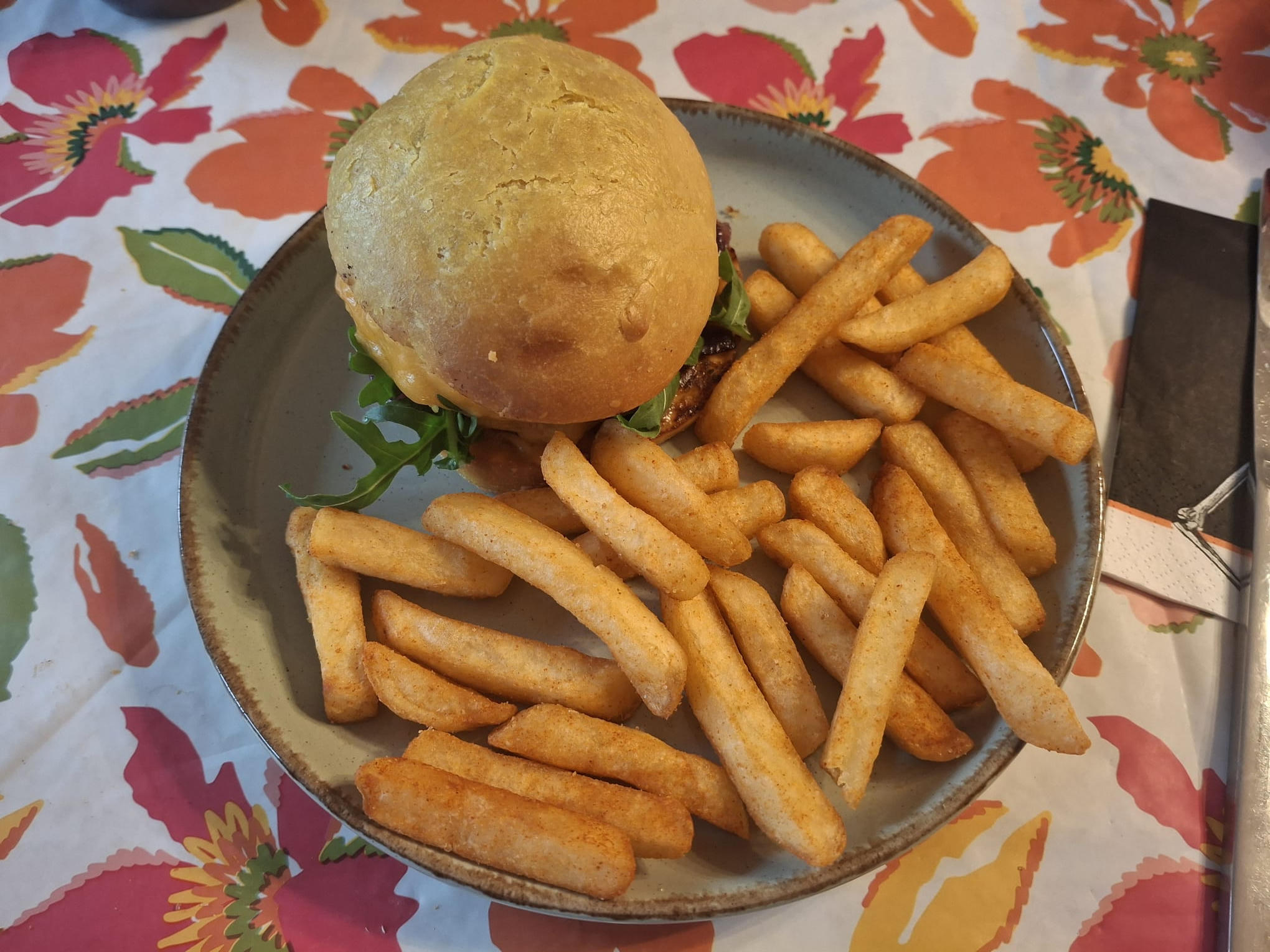
For the burger buns, I used the following recipe. The one thing I would change is the turmeric. I used half a teaspoon, but I would reduce it a bit more. I also only let the dough rise for an hour the first time. I think letting it rise for longer, around two hours, would have made the buns a bit better. Also, yeast needs warmth, so in winter, room temperature might be a bit too cold. In that case, you could put the dough in the oven at a very low temperature(<30°C).
For the patty, I used a vegetarian chicken alternative. The problem was that the crust stuck to the pan, so I recommend using a non-stick pan instead of a metal one. Once the patty is done, put some cheddar on top and cover the pan with a lid so the cheese melts.
I also cooked onions in butter over low heat for 20 minutes. The important thing here is that you always need more onions than you think. I used two or three onions for four burgers, but I would have doubled that amount. These onions taste so delicious that you could eat them on their own, so making too much is not all so bad.
Besides that, I added some store-bought burger sauce, tomato, and arugula.
Overall, the burgers were delicious!
- Violent Cop (1989)
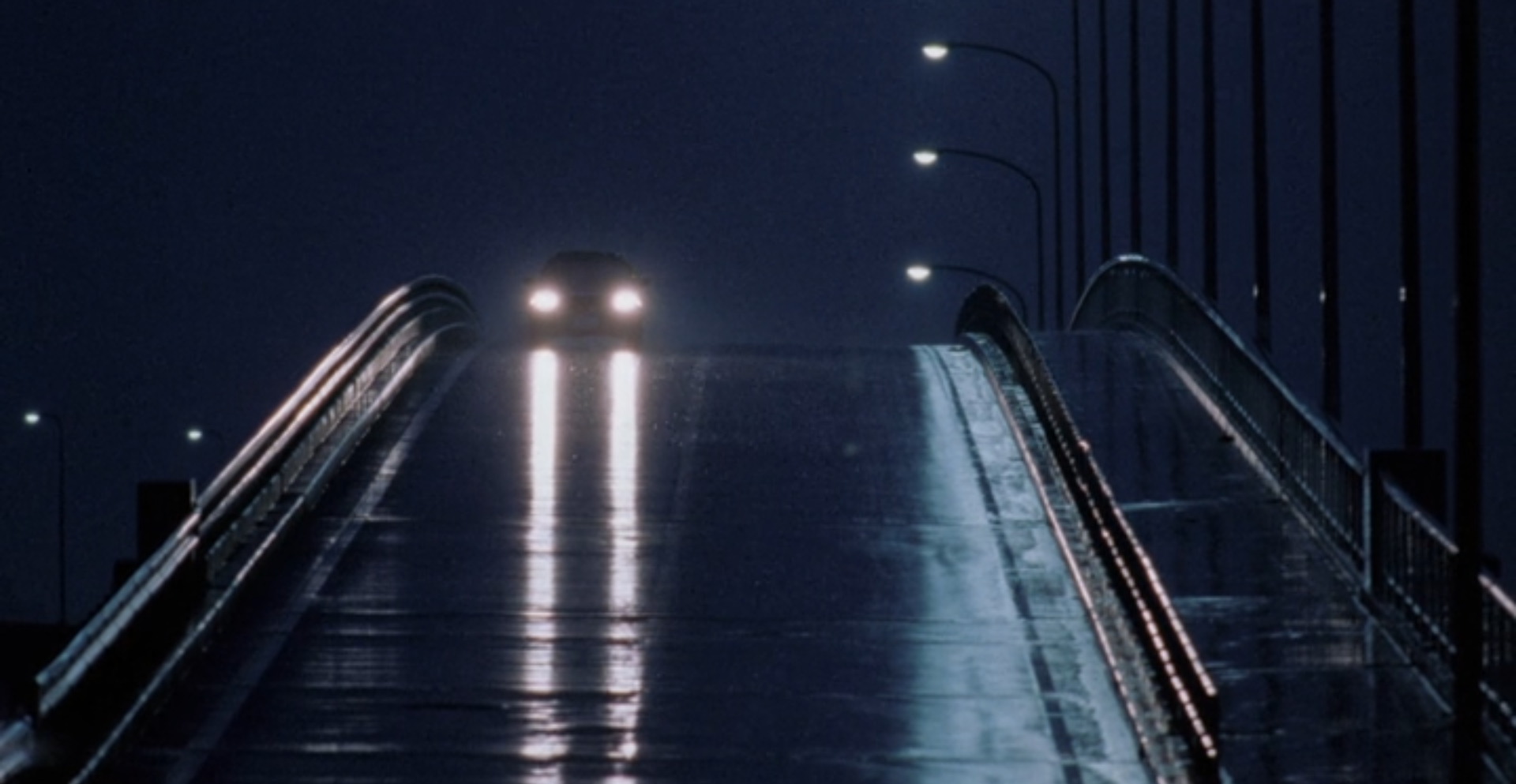
From the same director and main actor as Fireworks (1997), but this is the first movie he directed.
I feel like it has many static shots of our protagonist walking, either away from the camera, slowly towards the camera, or from the side, and the shots linger for a while, which gives the movie a rather slow and deliberate feeling that stands in radical contrast to the story. More on this later. I think these walking shots are a bit excessive; it almost feels like a walking simulator. Our director and actor Takeshi Kitano plays his role as a hard-boiled detective as well as he did in Fireworks (1997). I do wonder if he is one of those actors that can only play one role, but I haven’t seen too much of him yet to make this decision.
A quick random interjection: it is funny how every villain in Japanese movies has the same accent, where they just constantly roll the r.
Now to the story: on a quick glance it is a fun story, but on a deeper look I think there are many problems with the story, and I think one can see that this was the director’s first movie. But maybe I was just missing something. Anyway, here it goes, spoilers ahead.
First, if we think about how the story is moved forward after the initial murder is revealed, it follows the same pipeline: Azuma finds the first person that has something to do with the murder, beats him up until he is bloody, that person gives him the next person he is responsible for, then he beats them up again, and so on. It feels a bit lame.
Besides that, most of my criticism is probably how the movie ended. Although I liked the vision of the ending, I feel like it wasn’t well incorporated in the rest of the movie. First, why did they gang rape the protagonist’s sister? I feel like it didn’t change anything: our protagonist did not notice it, so it didn’t give him any motivation, and the villain is already villainous enough. This random act feels like it was not needed, felt unnecessary. Also, his sister acted strange/mysterious, and it was never really revealed what this was about, besides the offhand note that she has problems with her head. But this feels like it violates “One must not put a loaded rifle on the stage if no one is thinking of firing it.”
Another problem: why did our protagonist let himself get deliberately shot? One natural explanation might be that he lost everything and didn’t care anymore if he wanted to live. But if this is the case, this again was not hinted at very well in the movie. If this is what the director was going for, I would have wanted at minimum one throwaway line that reveals that our protagonist does not have much else besides caring for his sister and his job. On this note, again there was no explanation for why he shot his sister. One possible motivation, in line with Japanese culture, would be something along the lines of honor, which was hurt after she did drugs. But it didn’t seem like the protagonist cared much about that either, with him gambling.
The last thing that was strange: why did the one cop that was a stickler for rules suddenly turn corrupt? There was no indication for this. Thematically I like this, showing that nothing has changed and that the corruption continues, but I don’t feel like it’s well executed.
Again, in theory I really like the ending, I just don’t think the execution is that great. Besides the pacing issues because of the walking scenes, I feel like the action is great and very straightforward. But Fireworks is the better movie. 6/10
- Philosophical Ramblings #18: Return to Monke
There is an idea that I do not completely dislike: that human consciousness was a mistake. When I talk about consciousness here, I specifically refer to our ability to self-reflect, to think recursively, and to introspect.
The idea is that a large part of our thinking has little to do with what is happening in the present moment, and that this kind of thinking is not necessarily conducive to happiness. We could call this stimulus-independent thinking: thoughts that arise independently of whatever we are currently doing or experiencing. This includes thinking about future plans, replaying past events such as conversations we had with other people, reliving insults or embarrassing moments, wondering what we will eat for our next meal, thinking about what we are going to do tomorrow, and so on.
The reason why this is supposedly not conducive to happiness is that whenever we are doing an activity, if we are not wholeheartedly engaged in it, stimulus-independent thinking appears. In some way, it binds us. It makes us less carefree, constantly worrying or thinking about something else. We then look at animals, with the dog being one example that illustrates this idea, and admire how they seem to engage with the world with their whole being. They are focused on one activity, wholeheartedly and fully, without something else constantly happening in the background.
And then we look at the evolutionary tree and wonder where it all went wrong. Was it when the monkey turned into a human?
But I now wonder whether this is the wrong way to look at it. Yes, the monkey or dog is free in the sense that it can be wholeheartedly focused on its task without anything else tying its mind down. But in a way, it is not really free. Its wholeheartedness does not come from choice; it is, to some extent, necessary. That is simply the degree to which its brain is developed.
With the dogs wholeheartedness comes a certain degree of ignorance, both about its environment and surroundings and about its inner world. Its full engagement with an activity comes together with a lack of introspection.
So maybe we should not reject the abilities that make us unique among animals. Instead, perhaps we should embrace and combine both ideals: achieving a kind of aware, introspective wholeheartedness that exists out of choice.
- 13 Assassins (2010)
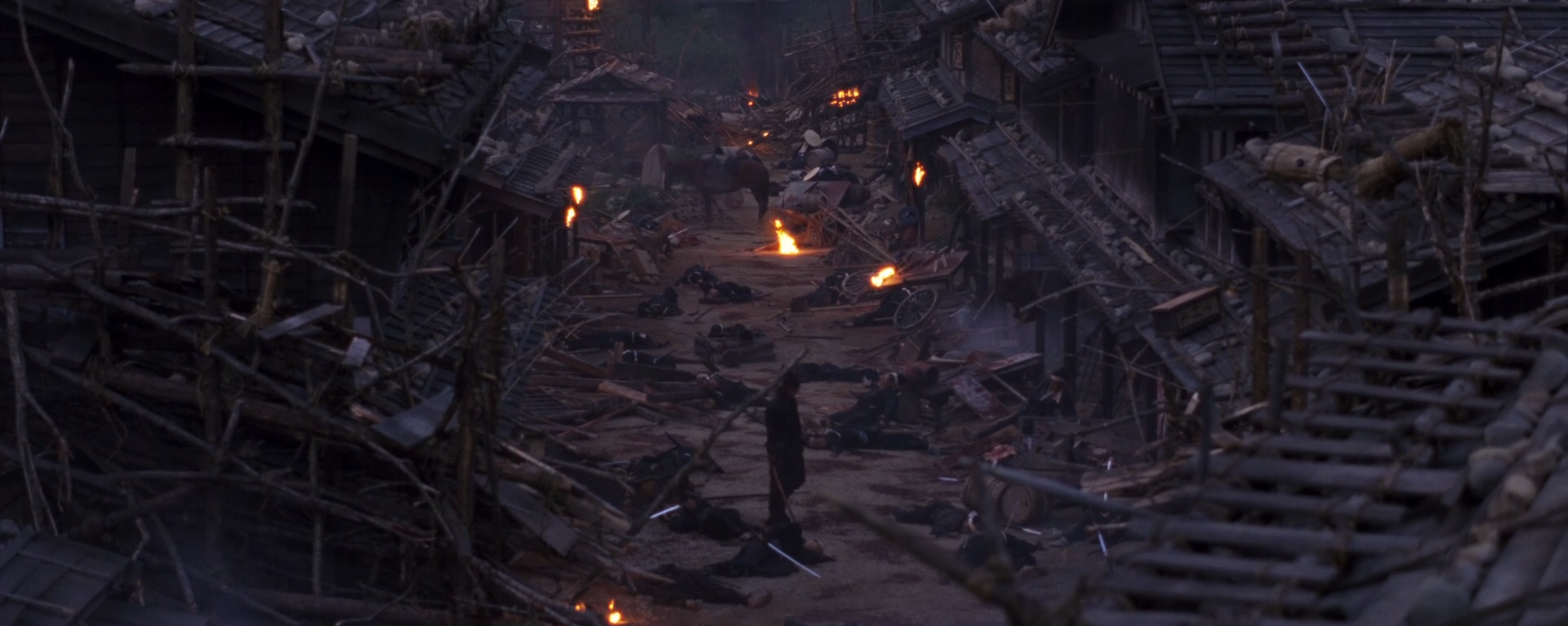
Straightforward action spectacle that feels way shorter than it actually is. Great massacres, great sword fights, one mission, one goal. I love the set design. The camera was maybe a bit too hectic at times.
Shinzaemon Shimada: He who values his life dies a dog’s death.
 I2P
I2P