What the Buddha Taught
July 21, 2026
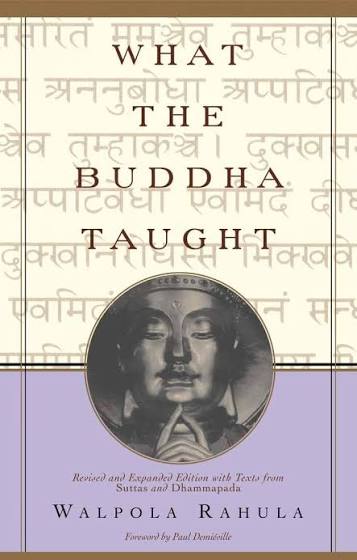
An introductory book on Buddhism takes around five hours to finish. I am by no means an expert, so it is difficult for me to judge how complete or entirely accurate it is, but it appears to cover the most important aspects of Buddhist thought.
It is important to note that the book is divided into two halves. The first half is explanatory, introducing the central doctrines of Buddhism, while the second half consists of a selection of original Buddhist scriptures.
A very brief overview of the first half is as follows:
The Buddha’s attitude toward his own teaching. The book begins by discussing how the Buddha viewed his doctrine. Doubt is presented as natural, and overcoming doubt is not a matter of believing something simply because a wise person says so, but of verifying it through one’s own experience. The Buddha also advocates tolerance toward other religions and schools of thought. Buddhism, at least as the Buddha intended it, is presented less as a religion in the conventional sense than as an existential philosophy or way of life. He deliberately refrains from answering many metaphysical questions because they are not necessary for ending suffering. This is illustrated by the famous parable of the poisoned arrow: a man is struck by an arrow, but before allowing the doctor to remove it, insists on knowing who shot it, why they shot it, what material the arrow is made of, and countless other details. The Buddha argues that this is irrational. What matters is removing the arrow, just as what matters in life is removing suffering rather than speculating about questions that do not contribute to its cessation.
The Four Noble Truths. The book then introduces the central framework of Buddhism:
- Dukkha – unsatisfactoriness or suffering.
- Samudaya – the arising or origin of dukkha.
- Nirodha – the cessation of dukkha.
- Magga – the path leading to the cessation of dukkha.
The First Noble Truth: Dukkha. Dukkha is often translated as “all life is suffering,” but the book argues that “unsatisfactoriness” is a better translation. Every experience contains some degree of dissatisfaction. For example, even while sitting comfortably there is often the feeling that one could sit more comfortably. Food could always taste better, or one eats too much and then experiences discomfort. Dukkha refers not only to obvious suffering but to the fundamental inability of any worldly experience to provide lasting satisfaction. Even the happiest moments eventually end, and their passing itself becomes a source of dissatisfaction. Everything is in constant flux: happiness fades, but so too does suffering. Likewise, the individual is understood as a constantly changing collection of physical and mental processes, known as the Five Aggregates (skandhas). There is therefore no permanent, unchanging self. As the book summarizes it, there are thoughts, but no thinker behind them.
The Second Noble Truth: The Origin of Dukkha. Dukkha arises through craving and aversion. We crave pleasurable experiences and want unpleasant experiences to disappear. An itch is unpleasant because we crave its cessation; pain is suffering because we resist it; pleasure becomes unsatisfactory because we fear losing it. Importantly, craving itself is not a first cause. Buddhism teaches dependent origination: everything arises only in dependence upon other conditions. Craving is not limited to sensory pleasures such as food, wealth, or health, but also includes attachment to ideas, opinions, identities, and beliefs. This attachment gives rise to becoming and, in traditional Buddhist doctrine, is also what makes rebirth possible, since beings cling to existence itself. A natural question follows: if there is no permanent self, what is reborn? The analogy often given is that of an ocean wave. A wave disappears and another arises, yet there is continuity without an enduring substance. What continues is not a permanent soul but an uninterrupted causal process of change.
The Third Noble Truth: Nirodha. Nirodha is the cessation of dukkha, commonly called Nirvana. Nirvana is described as beyond conceptual thought and language; it cannot be adequately defined because it transcends ordinary experience. Liberation is achieved through the cessation of craving, aversion, and attachment. However, Nirvana is not something that is produced, since whatever is produced has a cause. Rather, Nirvana is understood as the ultimate reality that is already present but obscured by ignorance and attachment. Just as Buddhism denies a permanent thinker behind thoughts, it also denies a permanent self that “enters” Nirvana.
The Fourth Noble Truth: Magga, the Path. The path to liberation is known as the Middle Way, avoiding both extreme asceticism and complete indulgence in sensual pleasures. It is expressed through the Noble Eightfold Path:
- Right Understanding
- Right Thought
- Right Speech
- Right Action
- Right Livelihood
- Right Effort
- Right Mindfulness
- Right Concentration
These are not sequential steps but qualities that should all be cultivated together. Right Mindfulness and Right Concentration are particularly developed through meditation. The book briefly outlines the traditional stages of meditative absorption (jhanas): first, sensual desire is abandoned; next, discursive thought subsides while joy and tranquility remain; later, joy itself disappears, leaving equanimity; finally, even pleasure and pain are transcended in a state of profound stillness.
Anatta (No-Self). The final major doctrine is anatta, the teaching that there is no permanent soul or self. What we ordinarily call the ego arises through processes of self-preservation and dependent origination. The self is conditioned, interdependent, and constantly changing rather than an enduring substance. Because of this, questions such as whether an immutable self possesses free will are less significant within Buddhist philosophy. Buddhism distinguishes between conventional truth and ultimate truth. Conventionally, it is useful to speak as though persons and selves exist, since ordinary language requires it. Ultimately, however, no permanent self can be found. The Buddha even argues that if one insists on identifying something as the self, it is more reasonable to identify with the body than with consciousness, since consciousness changes even more rapidly than the body. The persistent feeling of “I am” creates the illusion of a self where none ultimately exists, and seeing through this illusion is itself part of realizing Nirvana.
Meditation. The final chapter discusses meditation, which is the primary practical means of weakening attachment, craving, and aversion. Meditation is presented not merely as relaxation but as the cultivation and training of the mind. The four principal objects of meditation are:
- the body,
- feelings and sensations,
- the mind,
- mental, moral, and intellectual phenomena.
Different meditation techniques are appropriate for each category, with mindfulness of breathing serving as one of the most fundamental practices.