The Catholic Church: A History
January 25, 2026
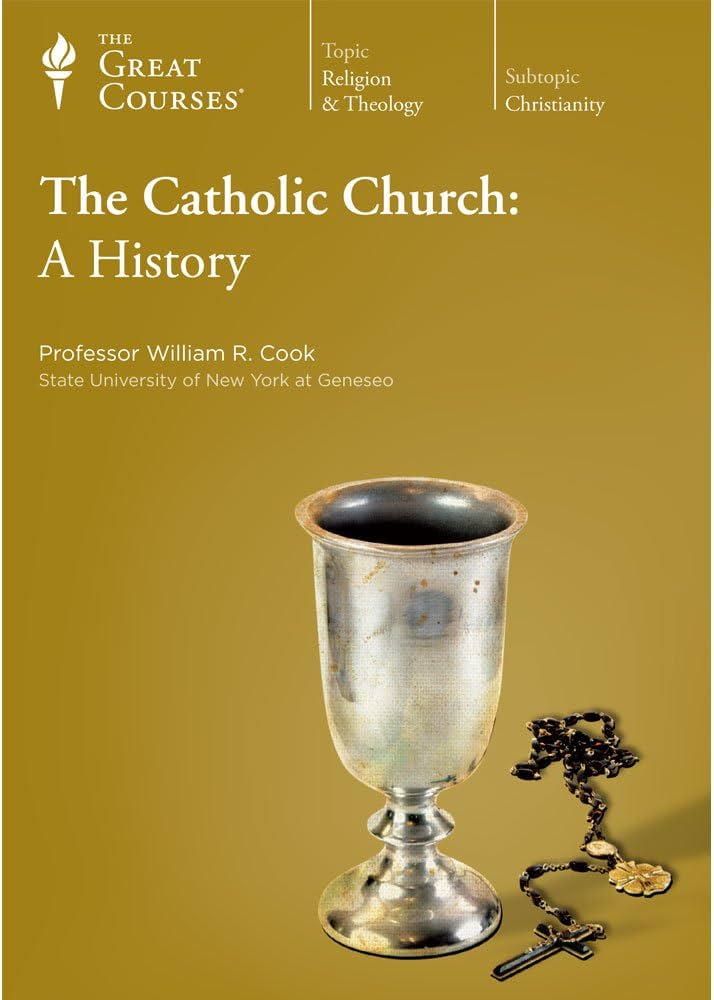
It takes around 30 hours to read or listen to and covers the history of the Church from the period immediately after the death of Jesus up to modern times. Although it goes very deep into individual periods, no single era takes more than about an hour, which keeps things moving. Honestly, it could probably have been twice as long and still worked well. I’d recommend it to anyone interested in Catholic history.
Some memorable tidbits for me include:
- How the Papal States came to be and how they eventually ended up in their current form
- The ongoing tension between Athens and Jerusalem—how much knowledge from outside Christianity should be incorporated
- The use and influence of major Church figures like Aquinas and Augustine
- An introduction to liberation theology
- The fact that we don’t actually know who founded the Church in Rome
- The incredible diversity of beliefs and practices within the Catholic Church, and the constant push and pull between unification (as attempted by Charlemagne) and diversity
- How, even before the Protestant Reformation, the Church was already divided. Most notably with the Bohemian movement
- How the Orthodox–Catholic split came about: starting with a few stubborn individuals on each side, then becoming solidified through events like the Crusades and the plundering of Constantinople
- The belief that baptism cleansed all sins, leading many people to delay baptism as long as possible so they wouldn’t sin afterward. Famously including Emperor Constantine, who was baptized on his deathbed
- After the fall of the Roman Empire, much of the existing structure like government, protection and judicial systems collapsed. Since the Church was present everywhere, it often filled this vacuum, with people going to local monks to resolve disputes. This, in turn, contributed to corruption within the Church
- The story of Saint Francis of Assisi, and how his legacy later inspired the Pope to use Assisi as the site of the World Day of Prayer for Peace, since Francis represented understanding between religions
- How Christianity became Germanized, absorbing elements from older traditions and local customs because societies that adopted Christianity didn’t want to abandon their existing practices
- The Crusades as a political move by the Pope against the Roman Emperor of the time, meant to demonstrate that the Pope held greater authority
- The difference between the medieval Inquisition run by the Church and the Spanish Inquisition, which was significantly more brutal
- How Lutheranism largely remained in Germany and Scandinavia because it began in Wittenberg, a relatively peripheral region, whereas Calvinism spread much farther due to its origins in Switzerland, a major central trade hub
- The story of missionaries in North and South America and their brutality, especially in contrast to early missionaries in China, who presented themselves as Confucian scholars in order to better integrate into society
- How the doctrine of papal infallibility developed slowly over time
- The existence of splinter Christian groups throughout history, particularly those that emerged from the Orthodox–Catholic schism and later returned to communion with Rome, and how some figures in papal conclaves may look Orthodox but are actually Catholic members of Eastern Catholic Churches