In die Sonne Schauen (2025)
January 20, 2026
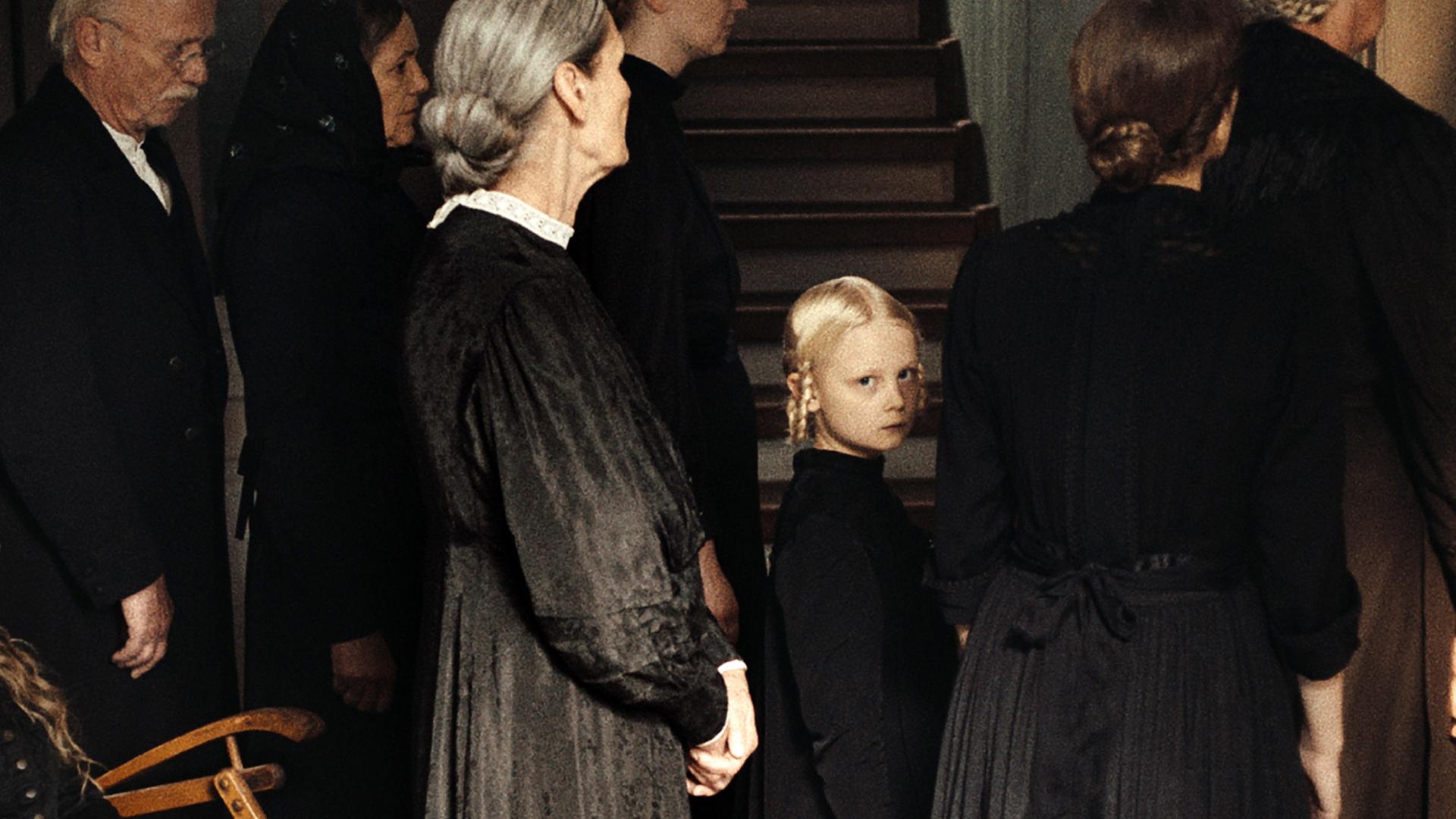
At my university there is a film group that regularly shows movies. Today they showed “In die Sonne schauen.” I looked up some information on it beforehand and it intrigued me, so I decided to watch it.
The movie is rather long and it also feels slow. Further, the film focuses on the darker sides of being human: for example, close-up shots of flies, dead people, and amputation.
This also raises the question of how to understand the movie. I do not think it makes much sense to force a coherent interpretive narrative onto it. Rather, it should be viewed as a series of thematic impressions that fit together and paint a picture, but a picture that remains abstract instead of clear and graspable. In other words, Nietzsche would say this movie is Dionysian instead of Apollonian.
As I already stated, I do not think there is a coherent thematic narrative one can extract from this film, but there are certainly themes in it that I want to describe. The movie is best understood as a set of dichotomies:
- Coldness of death vs. warmth of life: Throughout the movie there are multiple scenes in which a character in the midst of life describes it as warm—be it the sand and stones on the beach or a penis being touched. This is contrasted with the lifeless coldness of death, shown through the dead deer or the dead grandmother.
- Unimportant sensual experiences vs. important memories: Another dichotomy concerns sensual experiences that seem trivial and unimportant, yet are direct and memorable, like the smell of water or fresh-cut grass, and can be recalled vividly. This is contrasted with important memories of loved ones, such as the dead grandmother, whose exact face we can no longer remember. In the movie, this is depicted by heavy bloom and film grain when a character remembers something, contrasted with the non-grain, non-bloom of direct life.
- Youth full of life vs. the wish for death: The film plays across multiple time periods in each of which young women are the focus, and in each period the youngest has a yearning for death. We thus have the contrast between a person full of life who simultaneously wishes to be close to death.
- Sexuality against women vs. sexuality from women: Another theme is sexual violence against women contrasted with sexuality coming from women themselves. For examle in one scene a maid is basically sold into sexual servitude or an older man stares at a young girl. This is contrasted with sexuality initiated by women, particularly in the modern time period and the one from the DDR period.
- Physical death vs. metaphorical death: Another contrast is physical death, depicted in the dead grandmother, the dead boy, the dead deer, versus a more metaphorical death. Many characters who have a death wish describe themselves as not knowing who they are. By acting and imitating the behavior of those around them, they forget who they are; even their own names sound strange to them. In a sense, these characters, by becoming so much like the ones they emulate, are already dead. They have killed themselves in the process. This fits well with their death wishes, the girl who wants to stop her heartbeat, or the younger girl who tries to drown herself. Subconsciously they know that they are already dead, and their bodies simply continue doing what they are supposed to do.
- Not controlling the body vs. controlling the body: This brings me to the final contrast. Throughout the movie there are characters who are not in control of their bodies: the mother who can only laugh when something sad happens, the woman who constantly gags because her stomach acts on its own, or the woman who loses the ability to walk even though her legs work perfectly fine. In all these cases the conscious mind cannot control something more unconscious. This ties into the previous contrast: they know they are already dead, and their bodies also want to die.
What irritates me about this movie, especially compared to other films that are meant to be interpreted more metaphorically than literally, like Angel’s Egg or No Country for Old Men, is that whereas those films both describe a problem (in Angel’s Egg it is faith; in No Country for Old Men it is evil), they also provide at least the beginning of attempts at solutions (Angel’s Egg: accepting or rejecting faith; No Country for Old Men: accepting evil, fighting evil, or refusing to care). This movie does not build anything. It asks questions and shows contrasts but does not even provide the beginnings of answers.
Perhaps instead of viewing this movie as an archetypal myth in the Nietzschean sense, it makes more sense to view it as a purely Dionysian depiction of aspects of the human condition.
Mom somehow never knew when to laugh. If something was funny, sh edidn’t laugh. But if some thing bad happened, she did. When somebody died, for example. Then she suddenly started laughing and laughing really loudly, and couldn’t stop
LENKA: I loooove when skin has that musty river smell.
CHRISTA: And the smell of a cellar. I know.
LENKA: I looove the smell of cellar. I’m addicted to it.
NELLY: And nail polish.
LENKA: Yeah, ..but not quite as much ascellar smella
I remember I got a diary for my 15th birthday. I never knew what to write in it, as if my thoughts somehow weren’t worthy. Whenever I tried to write, I thought that someone would find it and read it after my death, and what a shock that would be for my mom. But if she finds it after my death without me having written a single word, she might think that I didn’t like her gift, or that I was ungrateful or something. So I started writing down the opposite of what I was thinking, sentences that would make my mom happy when I was gone.