Firworks (1997)
June 4, 2026
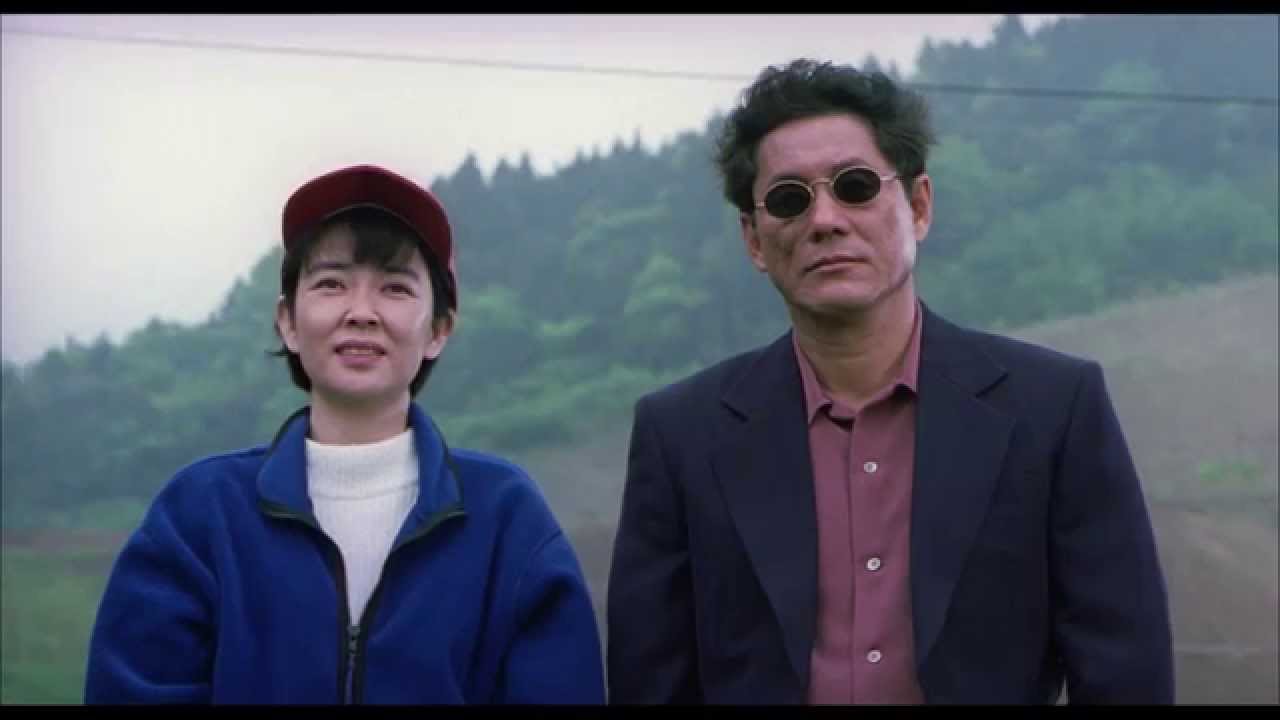
I appreciate how neat this movie is. It doesn’t try to do too much; it has a clear throughline and follows it all the way to the bitter end. It’s very tight, and that is particularly effective because of the uniqueness of the premise. It has one interesting setting and commits to exploring it fully without feeling the need to add much else. What’s especially interesting is how little the protagonist and his wife speak, no more than ten sentences throughout the entire movie. In that sense, it relies much more on atmosphere than dialogue. With this tightness also comes a certain straightforwardness. Aside from one point, the flowers in the paintings and the paintings in the bar scene, the symbolism and thematic exploration are fairly light. The film isn’t especially interested in abstract interpretation; it has a journey in mind and sees it through without unnecessary detours.
There also aren’t many action scenes, but when they do happen, they’re really good. They feel much rawer than the modern Hollywood fighting style, which often borrows from kung fu films and ends up looking more like choreography than actual violence. Here, the violence feels sudden, brutal, which fits the film much better.
The original title, Hana-bi, translates to “Fireworks,” though it can also be understood through its components: hana (“flower”) and bi (“fire” or “flame”). That contrast between beauty and violence lies at the heart of the film. The ever-present violence is juxtaposed with the flower paintings, reinforcing this central tension throughout.
The music is occasionally a bit goofy, but overall it’s excellent. It reminds me of the scores from Studio Ghibli films, which makes sense given they have the same composer. 7.5/10