- How Jesus Became God
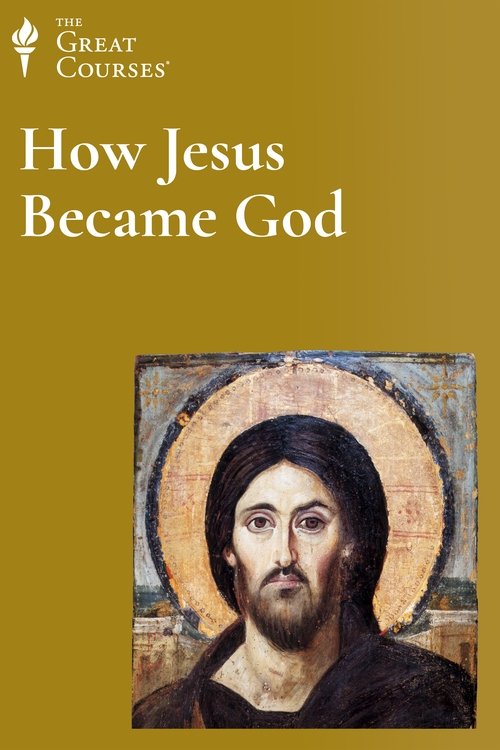
How Jesus Became God is a book (and also a series of lectures) by Professor Bart D. Ehrman that describes the historical development of what people thought Jesus was. He argues that, in the beginning, people did not think Jesus was a divine being and he was not worshiped as such. Instead, they believed that Jesus was adopted into divinity at his death. Over time, this belief developed further: first people thought he became divine during his baptism, then at his birth, and later that he was an incarnation of a lower divinity, until the belief was fully formed that Jesus is God and has always been God for all eternity.
The book begins with Ehrman presenting numerous examples from the Greco-Roman world that illustrate the different ways people believed humans could become gods, and how gods could become human. He shows that this belief was widespread not only in Greco-Roman culture but also within Judaism.
After that, he turns to the earliest things we can know about Jesus, the pre-literary traditions, which show that Jesus himself did not believe he was a god or part of any trinity, and neither did his followers.
Instead, Jesus was regarded as an apocalyptic Jewish prophet who preached about the imminent end of the world and how people should prepare for it morally.
Ehrman then discusses the death of Jesus and argues that we cannot really know whether Jesus was resurrected or not, but he points out that the witnesses described in the Bible are unreliable. He continues by exploring what the disciples came to believe about Jesus after his crucifixion, namely, that upon his death he became divine. Later disciples, such as Paul, thought this divinization occurred during Jesus’s baptism. Even later authors, like those of the Gospels of Matthew and Luke, believed it happened at his birth. The final Gospel, John, presents the view that Jesus was already God from eternity — identifying him with the “Word” (Logos) from the beginning of Genesis, through whom the world was created.
The book concludes with the views of the earliest Church Fathers, who wrestled with the question of who Jesus truly was. Some adopted the Docetic view, which held that Jesus only seemed to be human but was actually fully divine. Others supported Modalism, the belief that Jesus, God, and the Holy Spirit are simply different modes or aspects of one divine being. Finally, Ehrman traces the development of the doctrine of the Trinity and the Arian controversy: the debate over whether Jesus came after God or had always existed within God from eternity past.
- Persona (1966)

That was a film. The nurse was cute in the beginning. The longer the movie goes on, the more the feeling intensifies that something is off. It has some really courageous shots. Thematically, two becoming one? I didn’t get much more out of it. 6/10.
- awakebutstillinbed - Bloodline
- Flying Leaf

- Gozu (2003)

This is the third movie I’ve watched by director Takashi Miike, the other two being Ichi the Killer and Audition. And just like those two, this movie is very strange, though “strange” is an understatement. It’s easily weirder and more unsettling than both of them combined. It’s also the movie during which I most often audibly said, “What?”
I feel sorry for the protagonist: he gets a supposedly routine job from his boss, only to encounter the most bizarre things imaginable. At one point, it felt like he wasn’t even surprised anymore, just resigned.
If you want to watch something completely abnormal, full of moments that make you go “What?” and refuse to make any sense, then watch this. It’s exactly the kind of movie I love. 8/10.
 I2P
I2P