- A Respone to Domyo Dharma Talk 'Beyond Mindfulness: The Radical Practice of Undivided Presence'
I recently listened to a Dharma talk from a Zen monk called Beyond Mindfulness: The Radical Practice of Undivided Presence, and I think some of the points were wrong, or at least not what the Buddha originally intended. As such, this serves as a kind of response to it. Do keep in mind that I am a layperson and not trained in Buddhism, while the speaker is a trained Zen monk. With that out of the way, let’s get started.
The original goal of Buddhist practice is getting free from suffering and ultimately freeing oneself from saṃsāra.
So what is suffering and saṃsāra?
Suffering is created not simply by what happens to us, but by how we react to things. For example, if our partner cheats on us, the act of cheating is one thing, while the anger, hatred, resistance, rumination, desire for revenge, etc. that follow are another. We experience something unpleasant, and then craving and aversion arise around it: we want pleasant things to remain and unpleasant things to disappear. These reactions are deeply ingrained habits that have built up over our lives.
To free ourselves from suffering, we therefore need to break these habitual patterns of reactivity.
When something we perceive as bad happens, we have a few options. The first is simply to follow our first instinct, embracing our habitual reaction: someone insults us, we get angry, and we punch the guy. The second is to distract ourselves from the supposedly bad thing that happened: for example, by reading, going to the gym, going to a bar, playing video games, taking drugs, and so on. The problem with this is that we do not work through it but suppress it instead to our subconscious, which inevitable affect our mood and state of mind, producing suffering.
The third option is neither to act on the reaction nor to suppress it, but to observe it. We allow the unpleasant experience to be there without feeding it and without pushing it down. By observing the anger, fear, craving, or whatever else has arisen, we begin to see that it is not a solid, permanent thing. Sensations change, thoughts change, emotions change, and impulses change. By repeatedly observing these things without automatically reacting to them, the habitual pattern gradually loses its power.
The problem is that when we are completely overcome by anger, lust, fear, or some other emotion, simply deciding to observe it may not be possible, the emotion is too strong. And we cannot directly see, touch, smell, or hear an emotion itself. So what do we do?
This is where I think one of the Buddha’s great insights comes in: meditation. In meditation, we practise observing experience without immediately reacting to it, particularly by observing the body. Although we cannot directly observe “anger” as an object, we can observe how anger manifests in the body: tension, heat, pressure, changes in breathing, tightening of the muscles, and so on. By repeatedly observing bodily sensations closely and learning not to react to them, we train the mind not to automatically follow every impulse that arises.
Over time, we can begin to recognize these habits in everyday life. Someone insults us and anger arises. Instead of immediately identifying with it and acting on it, we recognize what is happening. We can feel the bodily sensations, recognize the thoughts and impulses, and observe them without having to obey them.
In this sense, enlightenment or nirvāṇa is not some mystical state of consciousness, nor is it simply a state of being completely “alive,” “wholehearted,” or “present.” It is freedom from the processes that produce suffering: the deep patterns of craving, aversion, clinging, and ignorance that keep the cycle of saṃsāra going.
This is why I think the author misses the point when they describe the “Buddha’s Way of Being” as the moon itself. The experiences they describe of acceptance, centeredness, clarity, peace, wholeheartedness, aliveness, may be valuable and may arise as a result of practice, but they are not necessarily the goal. They are transitory experiences and states, and therefore they themselves can become objects of attachment.
If I start thinking, “This is what enlightenment feels like; I need to maintain this state of wholehearted presence,” then I have created another form of craving. I am once again trying to hold onto a particular experience and make reality conform to what I want. In other words, I have created another form of saṃsāra.
I do agree with the author’s basic metaphor that all kinds of different teachings can be fingers pointing at the moon. With different Buddhist traditions we get different meditation techniques such as Vipassana, Anapanasati, noting, Zazen, and all of them can help us find the moon. But the moon is not achieving some special state of conciousness, nor is the technique itself the goal, the goal is using these techniques to break free from our everyday habits and conditioning. And only by this metric they should be evaluated, how much they help us in producing equanimity.
The moon is: seeing the processes of the mind clearly enough that craving, aversion, and ignorance no longer control us, and therefore dukkha ceases.
Mindfulness is an essential part of this process, but mindfulness itself is not the final goal. It is a tool for seeing what is happening in the mind and for learning not to automatically react to it. The important thing is not to become permanently mindful in the sense of maintaining some special state of conscious presence, but to understand the mind deeply enough that its habitual patterns of reactivity gradually lose their power.
That, to me, is much closer to what the Buddha was pointing at with the “moon.”
- The Long Good Friday (1980)
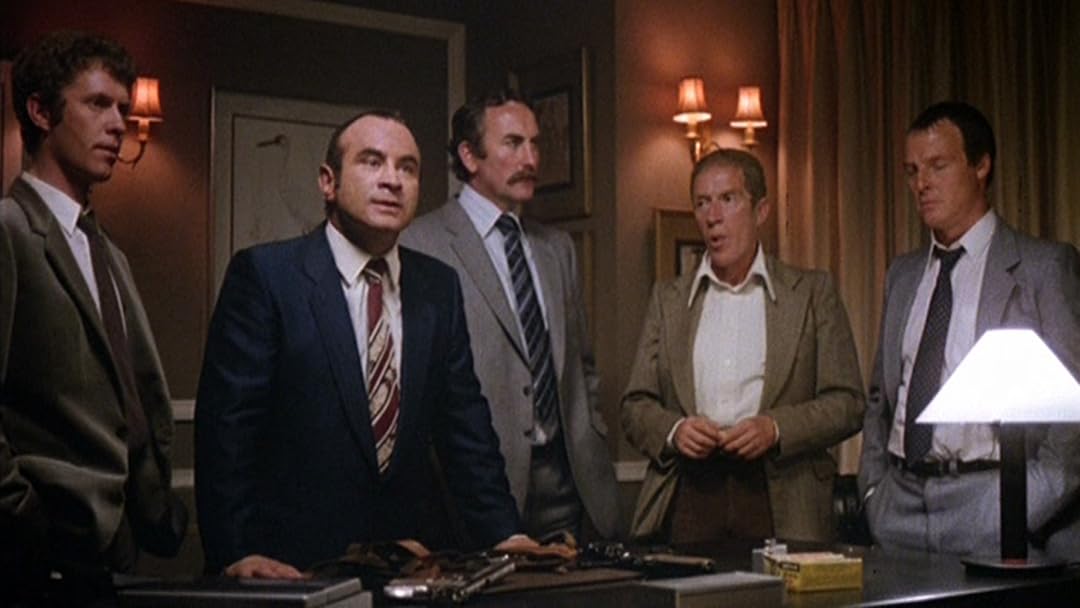
Gangster movie set in England in the 1980s. It was alright; there was nothing that really annoyed me. The heavy use of music in the first 10 minutes was interesting—in a film nowadays, this probably would have been much more suppressed. But besides that, the reason why I wouldn’t rank it any higher, there was nothing that really excited me about the movie. 6/10.
- Player of Game
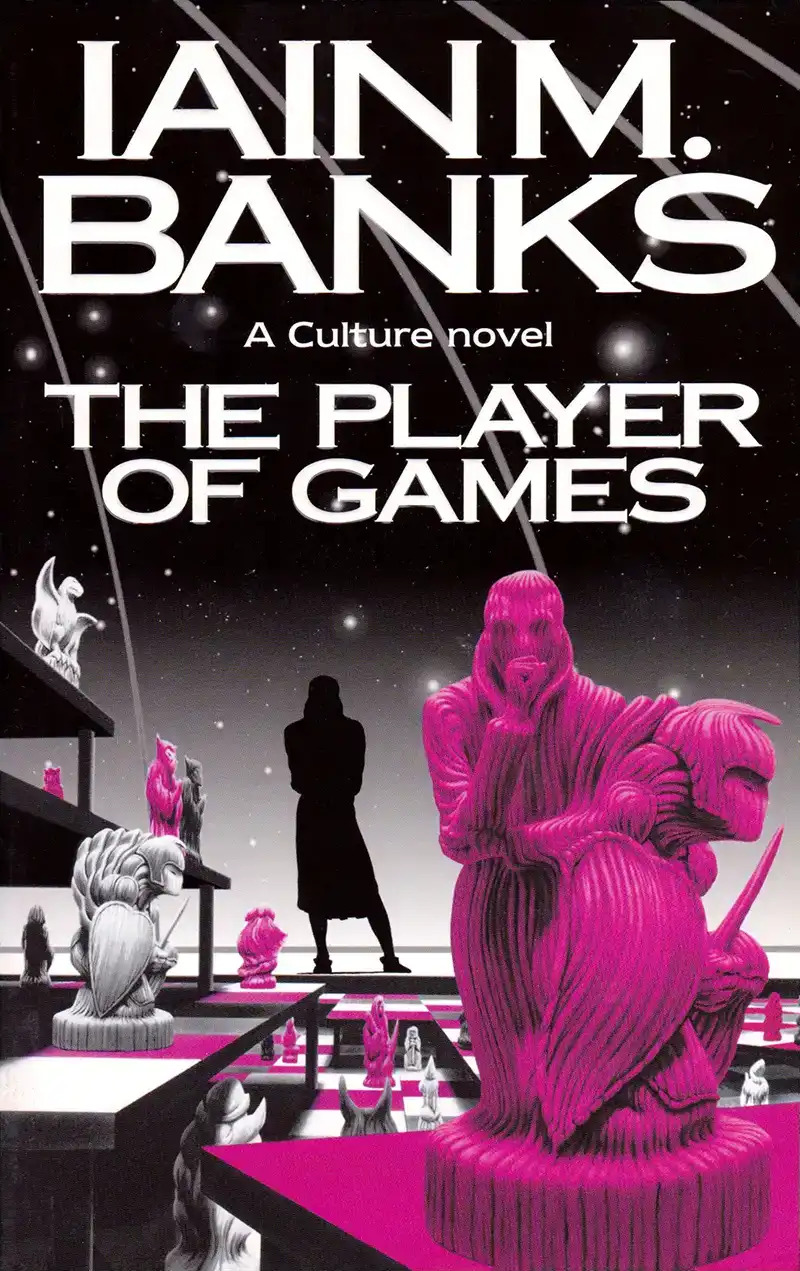
I liked this way more than the previous book in the series. I liked the narrative, the story, and the setting—all very fun. But I do wonder what the bigger theme or overarching point of the book was supposed to be. Why did the drone show the protagonist those torture videos? What changed because of that? Why was the protagonist participating in these hunts and then the kills were described in such a cruel way, as if the protagonist was participating in something negative, but then it results in no charcter change? The empire is also really stereotypical: “Oh yeah, we like torturing people. Why? Because it’s fun. We are so evil, muahahaha.”
It also annoyed me how little the protagonist cared about anything besides the game. Why do we have so many things introduced throughout the book that we never do anything with because our protagonist doesn’t care about them? I don’t know, it’s very weird. His motivation is also weird, but then nothing is really done with it, and there are many more issues like this.
Like I said, the story itself is good, but it’s not really clear what the book is trying to say, or if it even wants to say anything.
Here a review I found that addresses the thing I mentioned:
Review
<blockquote>The Player of Games is a slipshod hodge-podge of underdeveloped political and personal philosophy, weak worldbuilding, fetishistic gore, and questionable motivations, all cut up and duct-taped back together into something vaguely resembling a story. If you squint at it from a distance. In the dark. Actually, instead, close your eyes and imagine the book. You’ll have a better time that way.
For every glaring plothole that Banks rushes to plug with weak retconning, another bursts open. For every question I have about the world or the story, ten more appear along with a sloppy answer. This is what happens with an overdesigned world; with so much stuff going on, you can’t satisfactorily answer all the readers’ questions without the story itself taking a backseat. There’s some amount of belief suspension on the part of the reader that’s necessary for reading any fiction. But as an author, it is Banks’s responsibility to make sure there are still stakes for the characters, that everything between the front and back covers is self-consistent. And he fails.
Before Gurgeh arrives on Eä, he’s told that the reigning empire of Azad is this horrible, barbaric, oppressive society; a society in which it’s easy to anger the elite, to offend, to not only make low-risk social mistakes but mistakes that can risk his life. When Gurgeh arrives on the planet, though, it becomes immediately apparent that Banks wanted to have a horribly brutal empire without going through the effort of actually writing one. Gurgeh’s clothes and living quarters are bugged, but he’s told that no one actually cares what he says. Gurgeh isn’t disqualified from the game on the grounds of having Flere-Imsaho (a drone) around, even though parts of the Empire wants him out enough to attempt an assassination. That’s not even accounting for the myriad of minor inconsistencies that crop up throughout the book, even further suggesting that Banks should have fired his editor.
The characters’ motivations don’t make sense, either. The beginning of the book sets up Gurgeh as this disillusioned game-player, looking for something bigger and better, bored of always winning (even though he actually loses to a rando very early on). But that’s not what gets him to go to Azad; Mawhrin-Skel’s threat does, even though there’s no guarantee that by agreeing to go, Mawhrin-Skel would even be reinstated in Special Circumstances. In fact, it surprised me that the threat to his reputation meant anything, because this is only one of two instances where Gurgeh doesn’t approach a situation with anything but cool indifference; the other is when he’s facing death. Mawhrin-Skel’s desire to be reinstated in Special Circumstances might make sense, but all he can get out of Gurgeh is the promise that he’ll try. Contact’s motivations don’t make sense until the very, very end, and even then, barely; they want Gurgeh to go to this new, imperialistic planet - a hugely risky endeavor given that they don’t want to give away any details about the Culture - and play… a game? Even though the whole point was for Flere-Imsaho to assassinate Nicosar, the Culture had no reason to believe that that would dissolve their entire Empire - and it shouldn’t have, if Banks was actually a competent storyteller. And even Nicosar’s motivations - and Azad’s as a whole - are fuzzy. Why would a xenophobic, spacefaring empire accept an alien into the locus of their society and let him get so far as to challenge the emperor? It just feels lazy.
Not to mention that Gurgeh is an extremely unlikeable character, and it’s genuinely hard to tell if it’s intentional. Gurgeh is every nerdy incel’s dream - women fawn over him (but he’s not gay, ew), he wins every game (except that one where he lost all the way at the beginning), he can be mean to his friends and drones and everything / everyone else with no repercussions except for being regarded as a hero, he is always cool and tactical and never makes mistakes…. He’s annoying, cruel, and experiences exactly zero character development.
Even minor things - the overly-descriptive writing style, the poorly-executed meta-narrator - were frustrating. The whole empire thing was a self-indulgent fetishistic gore fest. It might have been redeemable if the rest of it was any good, but it wasn’t.
The Player of Games, on a metaphorical level, feels like it’s attempting the same thing as The Left Hand of Darkness, but much worse. People writing about a humanoid society with weird gender / sex stuff tend to forget that transgender people exist. Like, oh it’s a society with a third gender!! Imagine if we had one of those, ha ha. Rolling my eyes directly into the back of my head. Must we always associate gender with domination and, consequently, subjugation? Must we refer to changing gender as a “phase”? At least Le Guin’s novel made sense!
To sum it up: this book sucked. The end
~ astrangewind
- Principles of Human Knowledge and Three Dialogues
 Can be read as an introduction to idealism, which, alongside empiricism and rationalism, was one of the major philosophical debates from the 17th to the 19th century.
 - Ljot Swanhild: the process of disconnecting
My dream existence would be a stone, outside of the realm of time, and just sitting there, and be nothing.
 I2P
I2P