- On Seeing Beauty
How, then, can you see the kind of beauty that a good soul has?
Go back into yourself and look. If you do not yet see yourself as beautiful, then be like a sculptor who, making a statue that is supposed to be beautiful, removes a part here and polishes a part there so that he makes the latter smooth and the former just right until he has given the statue a beautiful face. In the same way, you should remove superfluities and straighten things that are crooked, work on the things that are dark, making them bright, and not stop ‘working on your statue’ until the divine splendour of virtue shines in you, until you see ‘Self-Control enthroned on the holy seat’. […]
If you see that you have become this, at that moment you have become sight. […] Just open your eyes and see, for this alone is the eye that sees the great beauty. […]
For no eye has ever seen the sun without becoming sun-like, nor could a soul ever see Beauty without becoming beautiful. You must first actually become wholly god-like and wholly beautiful if you intend to see god and Beauty.
~ Plotinus, On Beauty
- Mammal (2016)
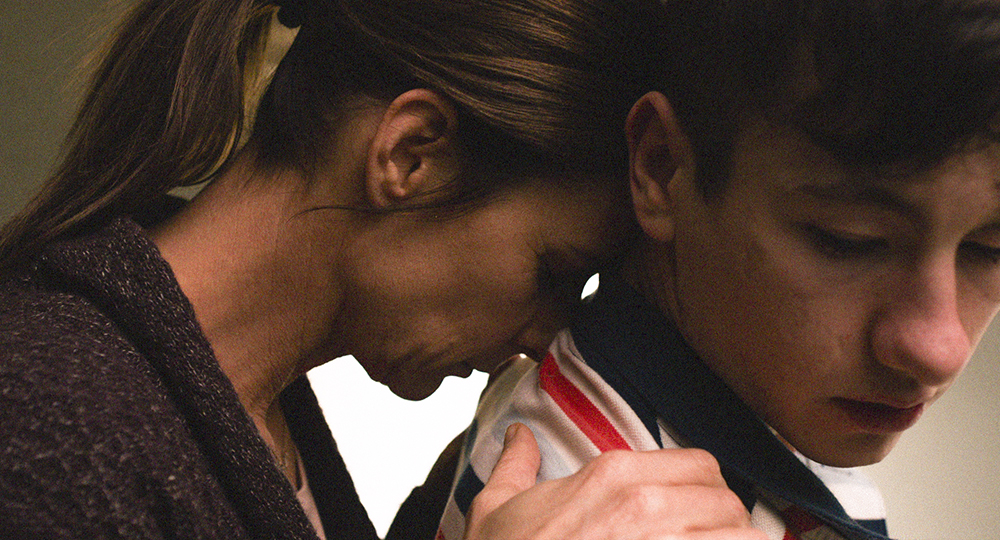
Women looses her son, takes in a homeless kid as a kind of replacement, they bang. 6/10.
- Watchmen (2006)
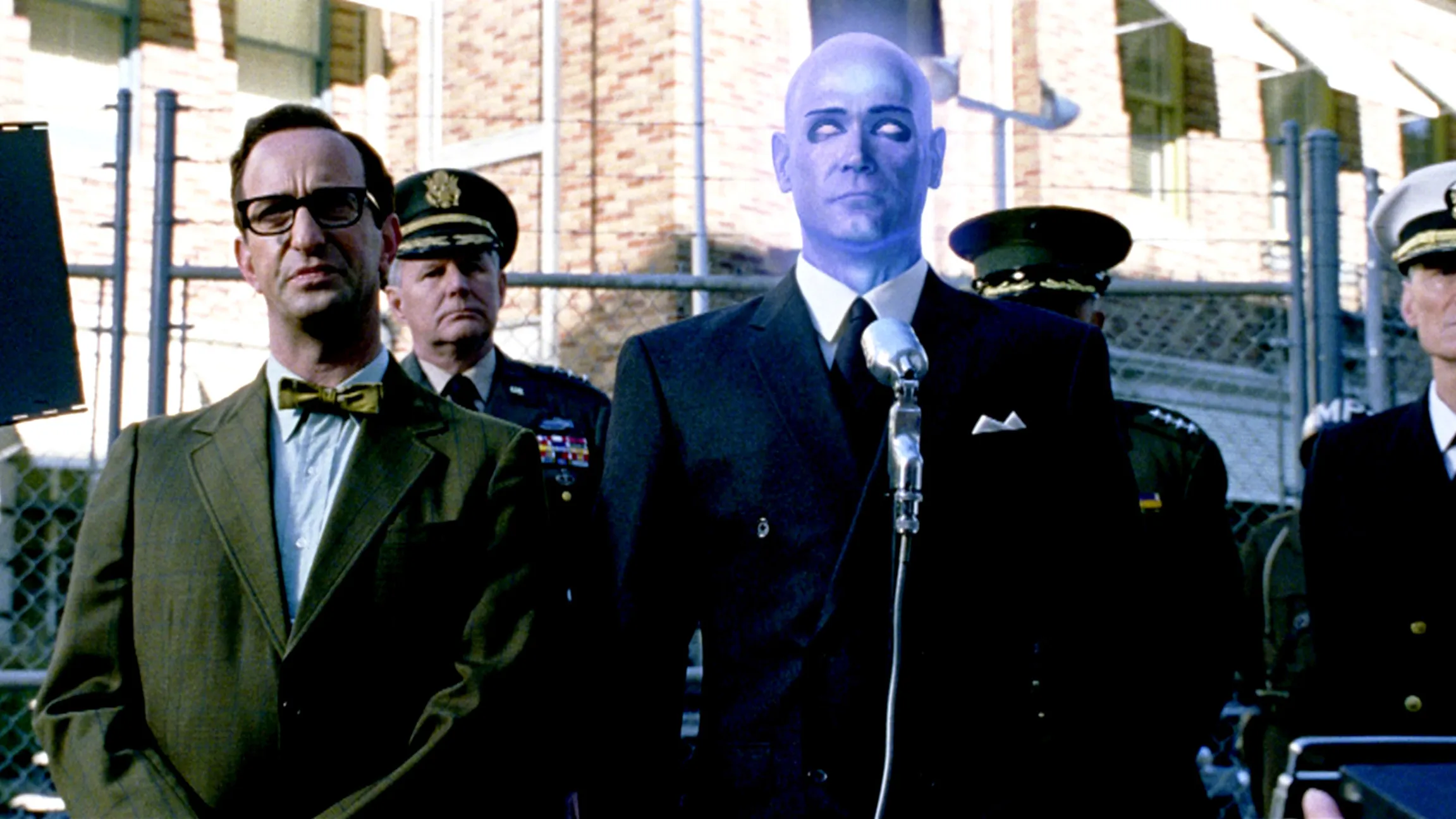
Uncut version is 3 hours and 40 minutes long. It has some really cool shots—very cinematic overall. If you’re looking for atmosphere, this is it. I really liked the intro where they introduce the Minutemen. Also, the animated pirate comic short was great. I love when movies do creative stuff like that.
I also just really like when characters self-narrate. I liked it in Casino, and I liked it here too.
There’s a reference to Dr. Strangelove in here—the war room full of generals and Nixon is straight from Strangelove.
I also liked the non-linear storytelling. It kind of feels like a mix of noir and superheroes. It’s not super deep or anything, but it’s just a great story overall. Though maybe there is something deeper—like the idea that if you think everything is evil, you eventually become evil.
I really liked the ending too. Usually in superhero movies, villains fall into two categories: either evil just to be evil, or the utilitarian type who does something horrible for some “greater good.” The first kind usually ends with a message like “don’t be evil,” and the second with “the ends don’t justify the means.” This movie doesn’t pick either one, and I appreciated that. It didn’t try to create a neat ending just to keep the American public—or the lowest common denominator—happy. 8/10.
- Henosis
For the past two weeks, I’ve been meditating regularly (following Culadasa) after getting up in the morning. Today was different. I was exhausted from the previous workday and decided to stay at home, which threw me off my rhythm, as such I skipped my regular mediation session in the morning.
After lunch, I chose to meditate a bit longer than usual to “make amends.” That’s when something happened—something I can only describe as similar to what Plotinus called Henosis: the union with the One (i.e., God) through meditation and contemplation, as described in his writings. Or ecstasy, from the Greek meaning “standing out of oneself.”
It began with me smiling. The smile grew wider and wider, followed by a feeling of overwhelming bliss. Everything outside my mind ceased to exist. Before my eyes, I saw myself moving through a tunnel. It lasted a few minutes but felt like only a few seconds.
When I opened my eyes, my surroundings felt strange and alien—accompanied by a deep sense that the things in front of me weren’t real.
Note: This is strictly a report of personal experience. I make no claims whatsoever about metaphysical reality or the existence of God, nor if it actually was Henosis, all I’ll say it was a Henosis like experience. It’s also worth noting that I’m currently reading parts of the Enneads by Plotinus, and my experience may have been influenced by this.
- On Being a Slave to Life
There are times when we ought to die and are unwilling; sometimes we die and are unwilling.No one is so ignorant as not to know that we must at some time die; nevertheless, when one draws near death, one turns to flight, trembles, and laments.
Would you not think him an utter fool who wept because he was not alive a thousand years ago? And is he not just as much of a fool who weeps because he will not be alive a thousand years from now? It is all the same; you will not be, and you were not. Neither of these periods of time belongs to you. You have been cast upon this point of time; if you would make it longer, how much longer shall you make it? Why weep? Why pray? You are taking pains to no purpose.You think, I suppose, that it is now in order for me to cite some examples of great men. No, I shall cite rather the case of a boy.
The story of the Spartan lad has been preserved: taken captive while still a stripling, he kept crying in his Doric dialect, “I will not be a slave!” and he made good his word; for the very first time he was ordered to perform a menial and degrading service,—and the command was to fetch a chamber-pot,—he dashed out his brains against the wall.
So near at hand is freedom, and is anyone still a slave? Would you not rather have your own son die thus than reach old age by weakly yielding? Why therefore are you distressed, when even a boy can die so bravely? Suppose that you refuse to follow him; you will be led. Take into your own control that which is now under the control of another. Will you not borrow that boy’s courage, and say: “I am no slave!”? Unhappy fellow, you are a slave to men, you are a slave to your business, you are a slave to life. For life, if courage to die be lacking, is slavery.~ Seneca, Letter 77
 I2P
I2P