- Strange Darling (2024)

I liked the opening. Movie has some really cool shots. In general, it felt very cinematic, with great cinematography. I also liked the way it was split into chapters; it felt very Tarantino-esque. The music during the opening chase scene annoyed me, though, and the dialogue was rough. Tarantino wouldn’t have written dialogue this bad. If you ignore the dialogue, it’s a 9/10; with the dialogue included, I’d give it a 6/10.
- Philosophical Ramblings #16: On Philosophical Methods
I have some reservations about the overuse of strict logical arguments in philosophy, especially the common structure of “premise, premise, conclusion.” This approach works extremely well in mathematics, where the objects of reasoning are precisely defined and where symbols have fixed meanings. However, natural language does not work in this way.
Words do not have perfectly fixed definitions that exist independently of their use. Rather, we learn the meaning of words by participating in a linguistic community: by observing how words are used in different situations and by developing a network of associations connected to them. A word is therefore not like a mathematical symbol with a single precise meaning, but more like a cloud of related meanings, associations, and intuitions.
Because of this, philosophical arguments that rely too heavily on formal logical structures can sometimes become misleading. It is often easy to find an apparent flaw in an argument by taking one association of a word used in a premise and applying it in a way that goes against the intended direction of the argument. The problem is not necessarily that the argument is wrong, but that the word itself contains multiple overlapping meanings.
For example, morality can be understood both as something emotional and intuitive, connected to feelings such as empathy and guilt, and as something rational, connected to principles and reasoning. God can be understood both as a personal being with intentions and as an impersonal foundation of reality. Time can be understood both categorically, as a fundamental structure of reality, and relationally, as something dependent on observers and physical systems. Many philosophical disagreements arise because different sides emphasize different aspects of the same concept.
For this reason, I think philosophy should not rely only on constructing strict logical arguments. Language is not merely a tool for representing precisely defined concepts; it is also a tool for shaping perception. In this sense, language is perhaps closer to painting than to mathematics. A painter does not communicate by giving a strict definition of an object but by arranging colours and forms in a way that guides the viewer’s perception. Similarly, a philosopher often uses words not simply to transfer information but to direct attention toward a particular way of seeing the world.
Philosophical writing is therefore less like proving a mathematical theorem and more like creating a conceptual landscape. The goal is not always to move from premises toward a single unavoidable conclusion, but rather to guide the reader into a region of understanding where certain connections and insights become visible.
Just as a painter refines a painting by adjusting individual strokes until the overall image conveys what they intend, a philosopher refines language word by word until the meaning they want to express becomes clearer. The meaning does not arise from one isolated definition, but from the relationship between all the elements together.
- Philosophical Ramblings #15: Idealism and the Fragmented Mind
One major argument in favour of idealism concerns epistemology: all knowledge of the external world is mediated through our senses, which we know from experience can be mistaken. On the other hand, our knowledge of our own mind appears to be direct and immediate. Our mind therefore seems to occupy a privileged epistemological position. Based on this assumption, thinkers such as Schopenhauer, Bernardo Kastrup, and Philip Goff develop their respective versions of idealism.
However, I am somewhat suspicious of the claim that we have direct, unmediated access to our own mind. This is not yet a fully developed argument, but rather a stream of consciousness exploring an intuition. Some time ago, I read Why Buddhism Is True, which argues that the mind is not a unified entity but rather consists of many different modules, each with its own drives and goals. For example, there may be a module responsible for the desire to have children, another for hunger, another for achieving social status, and so on. These different modules can come into conflict with one another. When we repeatedly act according to the impulses of one module, that module becomes stronger.
If we adopt this picture of the mind, it becomes less obvious that there is a single unified entity to which we have privileged access. Instead, we have to ask: who or what exactly is the thing that supposedly has this direct access?
To develop this further, we can look at the famous experiments with split-brain patients. In these experiments, one hemisphere of the brain can be instructed to perform an action, and afterwards the other hemisphere is asked why the person performed that action. Surprisingly, the speaking hemisphere often does not answer “I don’t know”; instead, it appears to construct an explanation after the fact. One interpretation of this phenomenon, also suggested in Why Buddhism Is True, is that the ego functions partly as a kind of public relations system.
Humans have always lived in tribes and social groups, where it was important for others to understand and trust our behaviour. Someone who acts randomly is difficult to trust because if we cannot understand their reasons, we cannot predict whether they will follow plans, rules, social norms, morality, or any other framework. Furthermore, a narrative system that explains and justifies our actions can help convince others that our behaviour is reasonable and beneficial, thereby gaining their support.
With this in mind, if I think of a triangle, it is not necessarily the case that there is one unified entity to which the triangle simply appears. Rather, there may be many different cognitive modules, each with its own interests, contributing to how the triangle is interpreted. In other words, the idea that everything appearing in consciousness is directly accessed by a unified observer may be a very naive understanding of how the brain functions.
Instead, our conscious experience may emerge from many interacting feedback loops that continuously modify and reinterpret what enters awareness. There is not simply something that appears to us and is then directly known; rather, there is a constant process of interpretation and reconstruction. We can observe something similar when we consider how our perception of things changes depending on our mood or our current mental state. The same object can appear differently depending on which cognitive systems are dominant at a given moment—not necessarily in its raw visual appearance, though this would also be an interesting empirical question, but certainly in its meaning and significance.
Therefore, I think modern cognitive neuroscience challenges some forms of idealism—not because it proves materialism, or because one can naively claim that the success of science demonstrates that materialism must be true, but because the more we understand the complexity of the brain, the less plausible a simple, unified, transparent mind becomes. Instead, we discover that our minds are far more fragmented, dynamic, and constructed than traditional philosophical pictures often assume.
- What the Buddha Taught
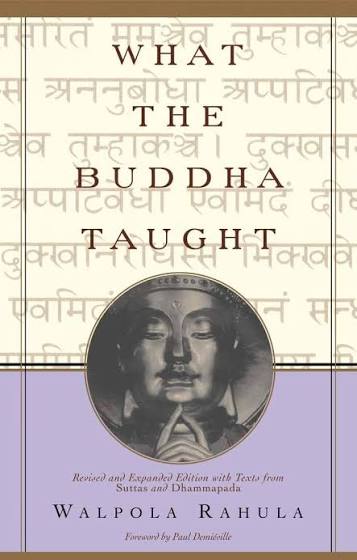
An introductory book on Buddhism takes around five hours to finish. I am by no means an expert, so it is difficult for me to judge how complete or entirely accurate it is, but it appears to cover the most important aspects of Buddhist thought.
It is important to note that the book is divided into two halves. The first half is explanatory, introducing the central doctrines of Buddhism, while the second half consists of a selection of original Buddhist scriptures.
A very brief overview of the first half is as follows:
The Buddha’s attitude toward his own teaching. The book begins by discussing how the Buddha viewed his doctrine. Doubt is presented as natural, and overcoming doubt is not a matter of believing something simply because a wise person says so, but of verifying it through one’s own experience. The Buddha also advocates tolerance toward other religions and schools of thought. Buddhism, at least as the Buddha intended it, is presented less as a religion in the conventional sense than as an existential philosophy or way of life. He deliberately refrains from answering many metaphysical questions because they are not necessary for ending suffering. This is illustrated by the famous parable of the poisoned arrow: a man is struck by an arrow, but before allowing the doctor to remove it, insists on knowing who shot it, why they shot it, what material the arrow is made of, and countless other details. The Buddha argues that this is irrational. What matters is removing the arrow, just as what matters in life is removing suffering rather than speculating about questions that do not contribute to its cessation.
The Four Noble Truths. The book then introduces the central framework of Buddhism:
- Dukkha – unsatisfactoriness or suffering.
- Samudaya – the arising or origin of dukkha.
- Nirodha – the cessation of dukkha.
- Magga – the path leading to the cessation of dukkha.
The First Noble Truth: Dukkha. Dukkha is often translated as “all life is suffering,” but the book argues that “unsatisfactoriness” is a better translation. Every experience contains some degree of dissatisfaction. For example, even while sitting comfortably there is often the feeling that one could sit more comfortably. Food could always taste better, or one eats too much and then experiences discomfort. Dukkha refers not only to obvious suffering but to the fundamental inability of any worldly experience to provide lasting satisfaction. Even the happiest moments eventually end, and their passing itself becomes a source of dissatisfaction. Everything is in constant flux: happiness fades, but so too does suffering. Likewise, the individual is understood as a constantly changing collection of physical and mental processes, known as the Five Aggregates (skandhas). There is therefore no permanent, unchanging self. As the book summarizes it, there are thoughts, but no thinker behind them.
The Second Noble Truth: The Origin of Dukkha. Dukkha arises through craving and aversion. We crave pleasurable experiences and want unpleasant experiences to disappear. An itch is unpleasant because we crave its cessation; pain is suffering because we resist it; pleasure becomes unsatisfactory because we fear losing it. Importantly, craving itself is not a first cause. Buddhism teaches dependent origination: everything arises only in dependence upon other conditions. Craving is not limited to sensory pleasures such as food, wealth, or health, but also includes attachment to ideas, opinions, identities, and beliefs. This attachment gives rise to becoming and, in traditional Buddhist doctrine, is also what makes rebirth possible, since beings cling to existence itself. A natural question follows: if there is no permanent self, what is reborn? The analogy often given is that of an ocean wave. A wave disappears and another arises, yet there is continuity without an enduring substance. What continues is not a permanent soul but an uninterrupted causal process of change.
The Third Noble Truth: Nirodha. Nirodha is the cessation of dukkha, commonly called Nirvana. Nirvana is described as beyond conceptual thought and language; it cannot be adequately defined because it transcends ordinary experience. Liberation is achieved through the cessation of craving, aversion, and attachment. However, Nirvana is not something that is produced, since whatever is produced has a cause. Rather, Nirvana is understood as the ultimate reality that is already present but obscured by ignorance and attachment. Just as Buddhism denies a permanent thinker behind thoughts, it also denies a permanent self that “enters” Nirvana.
The Fourth Noble Truth: Magga, the Path. The path to liberation is known as the Middle Way, avoiding both extreme asceticism and complete indulgence in sensual pleasures. It is expressed through the Noble Eightfold Path:
- Right Understanding
- Right Thought
- Right Speech
- Right Action
- Right Livelihood
- Right Effort
- Right Mindfulness
- Right Concentration
These are not sequential steps but qualities that should all be cultivated together. Right Mindfulness and Right Concentration are particularly developed through meditation. The book briefly outlines the traditional stages of meditative absorption (jhanas): first, sensual desire is abandoned; next, discursive thought subsides while joy and tranquility remain; later, joy itself disappears, leaving equanimity; finally, even pleasure and pain are transcended in a state of profound stillness.
Anatta (No-Self). The final major doctrine is anatta, the teaching that there is no permanent soul or self. What we ordinarily call the ego arises through processes of self-preservation and dependent origination. The self is conditioned, interdependent, and constantly changing rather than an enduring substance. Because of this, questions such as whether an immutable self possesses free will are less significant within Buddhist philosophy. Buddhism distinguishes between conventional truth and ultimate truth. Conventionally, it is useful to speak as though persons and selves exist, since ordinary language requires it. Ultimately, however, no permanent self can be found. The Buddha even argues that if one insists on identifying something as the self, it is more reasonable to identify with the body than with consciousness, since consciousness changes even more rapidly than the body. The persistent feeling of “I am” creates the illusion of a self where none ultimately exists, and seeing through this illusion is itself part of realizing Nirvana.
Meditation. The final chapter discusses meditation, which is the primary practical means of weakening attachment, craving, and aversion. Meditation is presented not merely as relaxation but as the cultivation and training of the mind. The four principal objects of meditation are:
- the body,
- feelings and sensations,
- the mind,
- mental, moral, and intellectual phenomena.
Different meditation techniques are appropriate for each category, with mindfulness of breathing serving as one of the most fundamental practices.
- Philosophical Ramblings #14: A Rejection of Morality
Every ethical situation presents a demand to choose. This demand, the necessity of choosing between alternatives, of taking a stand, is what makes it an ethical situation at all. Not choosing is itself a choice, but one made passively, without the burden of active deliberation.
The obsessive construction of moral frameworks arises from a desire to abdicate this burden. Each ethical confrontation places a weight on the chooser: one must choose, and one must live with that choice forever. The responsibility is unsharable and permanent. To escape this, the individual creates or adopts, a moral framework. Then one says: ‘I did what is right’. The framework becomes a screen: responsibility is displaced from the individual onto an anonymous abstraction called “morality,” where it is diluted and depersonalised. The individual no longer stands behind a choice as its author, but hides behind a pre-approved category.
Following a moral framework is a choice made by proxy. The framework chooses in one’s stead. The decision was already settled before the situation arose, not because the agent reflected and resolved, but because the framework had already classified the kind of situation and prescribed the correct response. This is the deepest abdication: not the refusal to act, but the refusal to bear the weight of acting as oneself.
 I2P
I2P