- Great Minds of the Eastern Intellectual Tradition
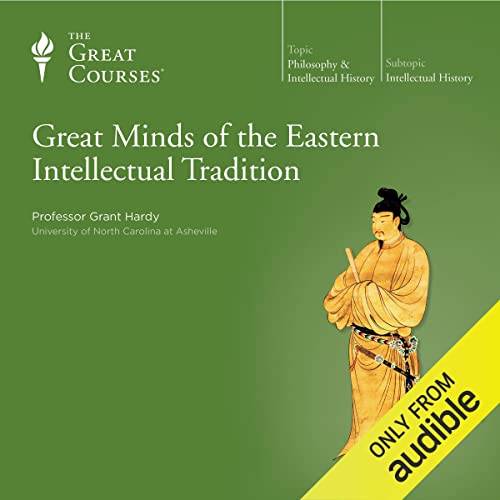
ould recommend. It is mostly about philosophical and religious thinkers, but also covers some scientific ideas.
What I will say, however, is that you spend relatively little time with the individual thinkers. No thinker gets more than one lecture, and the lectures are relatively short. This makes it hard to remember everyone in detail, but you do get a good overall picture, a good “vibe check”, of the different ideas. It is also always valuable to look into different traditions, not only to see ideas similar to those you’ve heard from the Western tradition expressed through a different conceptual language, which can help illuminate them. As the saying goes, “The one who knows only one language knows no language.” This is doubly true for philosophical traditions.
It is also helpful to see assumptions that we make in the Western tradition but that are not made in Eastern traditions, leading to very different philosophical systems.
- Mountain

- The Master who embraces Simplicity
Honor, position, power, and wealth are like visitors, since they are not eternal things, and once they go, they cannot be retained. It is like the case of flowers in the spring, which must necessarily die and fall to the ground. In attaining them, one is not delighted; in losing them, what sadness is there?
Now, I know that I am lazy by nature and extremely short on talent. Even if I were to be respectful and go about my duty, proceeding as quickly as dust on the wind, I would not necessarily be able to achieve great fame or position, or avoid sorrow or encumbrance. How much more so is this the case, since I cannot even do this?
~ Ge Hong, The Master Who Embraces Simplicity
- A Beginners Guide to Aquinas
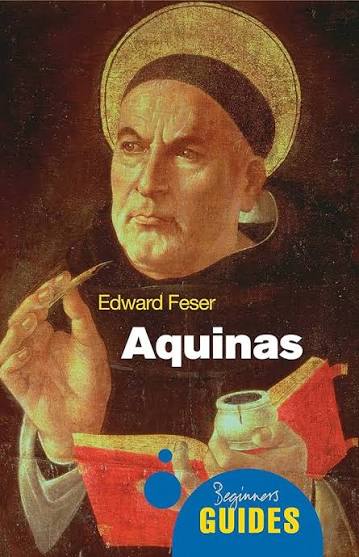
Well-written introduction to Aquinas. I liked the recurring comparisons to contemporary Western philosophers, they really helped put his ideas into context and highlight the different assumptions each philosopher makes.
Although I don’t agree with his metaphysics (eww, essentialism), it’s a very elegant system. Basically, everything follows coherently from his metaphysical framework.
Also, I finally read something about the four causes. The four causes can be understood as four different answers to why questions:
- Material Cause: Matter is what allows a thing to change, either accidentally, such as a change in shape, or substantially, such as the death of a living thing, or a compound returning to its elemental parts e.g. the material cause of why a table exist is that its made of wood.
- Formal Cause: It is what something changes into, i.e. what makes a thing what it is. Form is often confused with the whole substance, whereas it is a thing’s essential difference, for example, man is a rational animal, what makes man a man, is his rationality, i.e. what makes him different from other animals e.g. the formal cause of a table is its design.
- Efficient Cause: This consists of things apart from the thing being changed or moved, which interact so as to be an agency of the change or movement. For example, the efficient cause of a table is a carpenter, or a person working as one, and according to Aristotle the efficient cause of a child is a parent.
- Final Cause: his is a change or movement for the sake of a thing to be what it is. For a seed, it might be an adult plant; for a sailboat, it might be sailing; for a ball at the top of a ramp, it might be coming to rest at the bottom e.g. The final cause of the table is that its gonna be used for dining.
- Man in the Well
Thus I have heard. Once upon a time Buddha was residing in the garden of Anathapindada at Jetavana in Sravasti, with a great number of bhikshus. Among them there was the great Emperor Shoko, and Buddha addressed him:
“There is a parable which I will tell you, and you bethink deeply its meaning.
“In olden times a man was travelling through a wild prairie-land where he met a ferocious elephant. In his fear he ran away, but the elephant pursued him hotly. On the way there was a deep well at the root of a tree, on which he climbed down to escape the danger; but, O horror! he saw two rats, one white, the other black, gnawing at the root alternately; and snakes on the four sides of the well threatened to bite the poor man with their poisonous fangs, while at the bottom of the well a large dragon was waiting to kill the suspended man with his sharp claws. And there was a hive in the root of the tree from which he sucked five drops of honey, and then the bees stung him. After this, the tree was burned by a fire which came from the prairie.”
When the Emperor heard this dreadful story, he asked the Buddha:
“Why did that man undergo so much suffering, and how could he suck honey notwithstanding the evil consequences?”
Then the Buddha replied:
“Great Emperor, this parable illustrates the fate of man. The wild prairie is our ignorance; the man represents the condition of all living beings; the elephant is the transiency of the world; the well is the birth and death of man; the tree root is life; the white and the black rats are day and night; their gnawing is the slow lapse of time; the snakes on the four sides are the four elements, namely earth, water, fire, and air; the honey-drops are the five sensual desires, arising from visible form, sound, smell, taste, and touch; the bee is sin; the fire is disease and old age; and the dragon is death.
~ The Man in the Well
Meaning
Human beings are surrounded by impermanence, aging, illness, and death, yet instead of recognizing the situation and seeking liberation, they become captivated by transient pleasures.
 I2P
I2P