Ernst Jünger
November 15, 2026
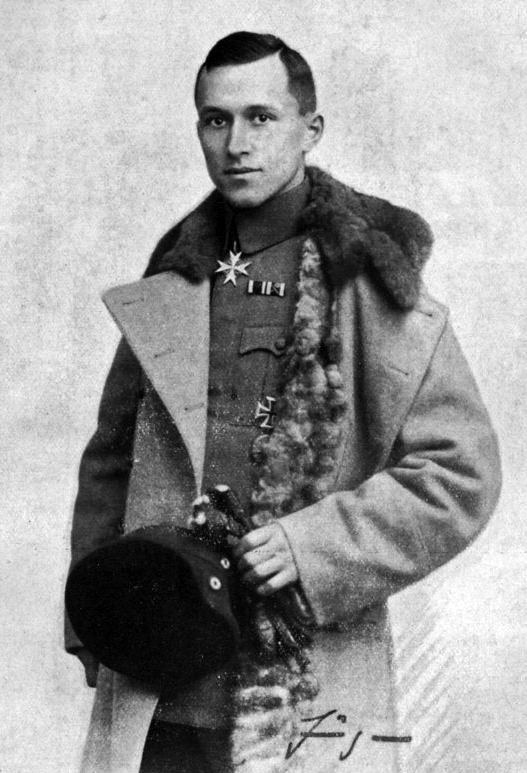
Came across the Wikipedia article on Ernst Jünger, and what a legend this guy is. Just to name a few things, and this is by no means exhaustive, the Wikipedia article is well worth a read.
At the age of 17, he enlisted in the French Foreign Legion, deserted to become a big-game hunter in Africa, got captured, and was only allowed to return home through the intervention of the German Foreign Office, since his departure in 1913 was illegal under German law. He then volunteered for the First World War, eventually becoming a platoon leader and earning the Iron Cross for saving comrades in battle.
All the while, he was also pursuing his many other interests: taking war photographs, collecting beetles because of his fascination with entomology, reading various philosophers, and keeping a war journal. After the war, he became a prolific writer and an influential figure among German conservatives. Yet when the Nazis came to power in the 1930s, he refused to get involved with them. For example, he was one of the few prominent conservative figures who did not appear on Goebbels’ radio broadcasts to endorse Hitler. He even reportedly became involved in a plot to assassinate Hitler. Despite this, Hitler personally spared him from persecution, apparently because he admired his books.
He went on to write a book about how Germany should be dealt with after the war, narrowly escaped death once again, this time at the hands of the communists, and eventually became one of the most prominent figures associated with the literary genre of magical realism. He wrote numerous books, experimented with various drugs, including cocaine, ether and LSD, and even took LSD with Albert Hofmann, its inventor, personally.
And he was still travelling around the world in his seventies, continuing to write. He lost both of his sons: one died by the SS after being sent to a penal battalion, the other by suicide. Throughout his life, he corresponded with and interacted with some of the most famous intellectuals of his time, including Heidegger.
Even after turning 70, he continued writing on an extraordinary scale. His Siebzig verweht alone spans roughly 2,500 pages, and he kept writing until his death at the age of 102.
What a life. It feels as though this man managed to experience just about everything.