Reflections on the Psalms
January 14, 2026
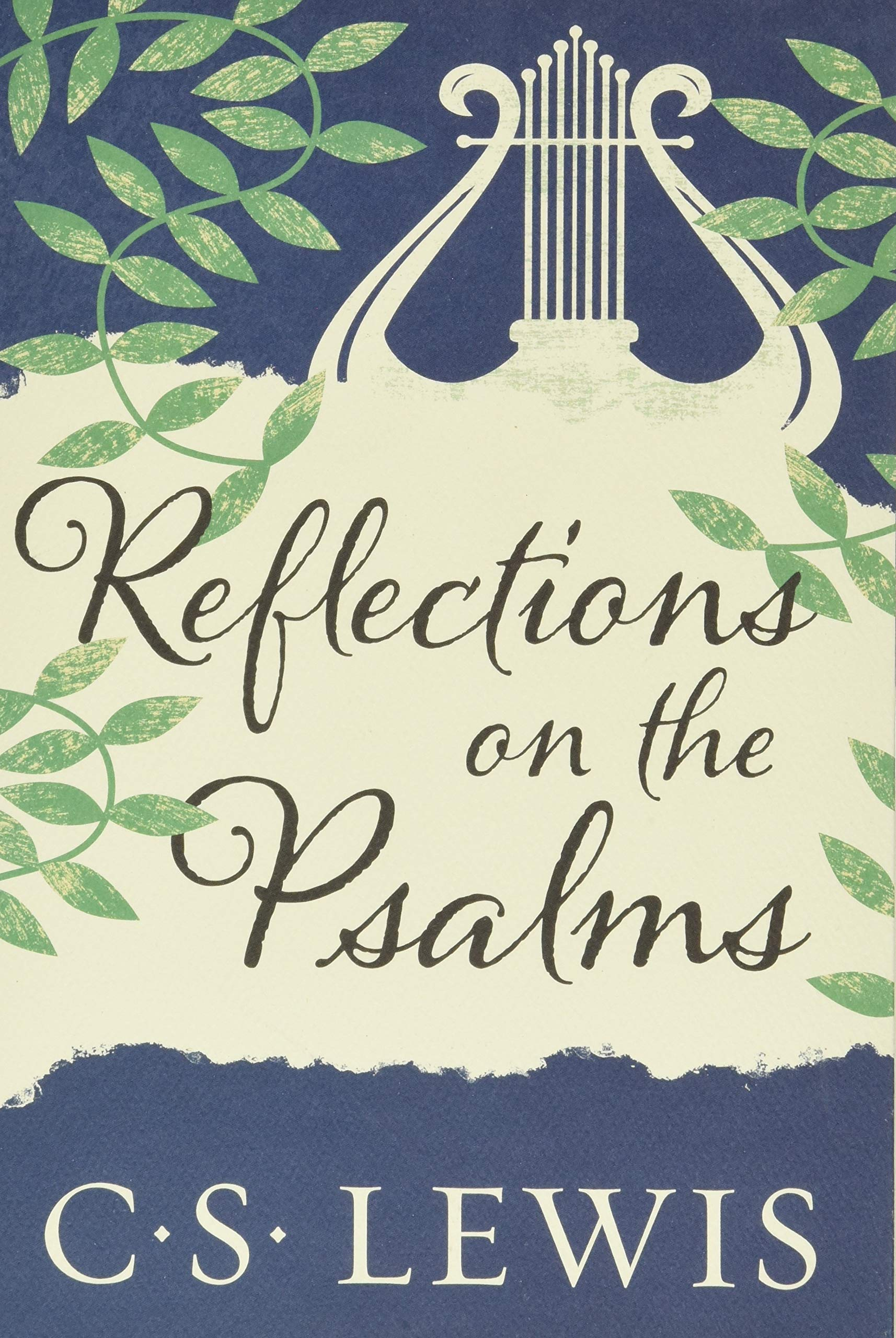
Very short book, can be read in a matter of two to three hours. One probably gets more out of it if one is very familiar with the Psalms or reads it alongside them (though he mostly repeats the psalm he is currently talking about). I liked, for the most part, his interpretation. Here’s a summary of what I found interesting:
- Some Psalms go all the way back to David, but most are believed to have been created after the Babylonian captivity.
- The most common pattern/technique in the Psalms is parallelism — the practice of saying things twice in different words.
- One of the few poetic techniques that can survive translation (meter and rhyme usually don’t).
- Many Christians tremble when they hear of Judgment Day, meanwhile the Psalms talk very positively about it. Lewis compares this to how the Jews viewed judgment as a civil case with themselves as the plaintiff, while Christians think of it as a criminal case where they are the accused.
- Behind this is the historical fact that it was often very hard for a regular person to get justice without the resources to bribe judges and officials, so they looked forward to divine justice.
- In that sense, the Jewish picture enhances the Christian one: Christians fear Judgment Day because they know they could never adhere to the divine and infinite standard of purity, while the Jewish perspective helps us realize we don’t even adhere to the human standard. Who among us has never wronged another human?
- Many times in the Psalms there is a lot of hatred against the writer’s enemies.
- How should Christians deal with this hatred? Ignore it? Accept it? One approach is to recognize that we modern people also have plenty of hatred — we simply disguise it — whereas they were more honest about their feelings.
I am exceptionally blessed in having been allowed a way of life in which, having little power, I have little opportunity of oppressing and embittering others. Let all of us who have never been school prefect, NCO, schoolmaster, matron of a hospital, prison warden, or magistrate give hearty thanks for it.
- Still, their reaction to injustice with hatred is wrong, and as Christians we should not hate but forgive.
- There is often the impression that the Jews are more vindictive than pagans, but the reason is that the Jews took justice — i.e., right and wrong — more seriously than pagans did.
- In the Psalms, when they speak of death, it is always in shadowy terms. They had little belief in a future life. What modern Bibles translate as “souls” means “life” in Hebrew, and “hell” means simply the land of the dead (Sheol).
- The most valuable part of the Psalms is that they can express the same delight in God that made David dance.
- The poets do not differentiate between love of God in a spiritual sense and love found in participating in church, sermons, or festivals — for them that was one and the same.
- It wasn’t possible for them to disentangle the spiritual from the social practices — the two were intertwined.
- Thus when the Psalms talk about “seeing the Lord,” they mean something like seeing the festival. A modern Christian at such a festival might hear music, see instruments and celebration, and in addition feel the presence of God — for the poets there was no distinction, no dualism.
- The Psalms talk about how following God’s laws is delightful and beautiful — but how can following laws and commandments be delightful?
- How can a hungry, poor man in a shop full of food who refrains from stealing find this delightful?
- One answer is the satisfaction the poets feel in obeying a law — the pleasure of a good conscience.
- The theologian’s Euthyphro dilemma: some thought God could have commanded us to hate, since all goodness comes from Him. Lewis disagrees — good is independent of God, and God delights in it because it is good. The Psalms are delighted to be on the correct side of that.
- The Psalms tell us not only to avoid wicked actions, but also wicked intentions — e.g., wishing someone harmful things. But should Christians then segregate themselves from society?
- Avoid people if you can, but not always. If someone says something wicked, silence is sometimes a good technique. If it is too wicked, you may protest, and often you will find many others also dislike the wickedness — we do not want people to think Christians are only about judgment.
- Handling social situations with wicked people requires both good intentions and good social skills. Many of us lack the latter, so it is prudent to avoid such situations.
- “Lead us not into temptation” often means: deny me those gratifying invitations from interesting people, which I am at such risk of desiring.
- This reminded me of the Stoics, who say we should keep good company — virtuous people — because our environment determines who we become.
- The Psalms do not really have nature poetry, because nature was simply all around them — the fish they caught, the cows they milked — so there was no reason to separate nature from themselves with special poetry about it.
- One stumbling block for Lewis is the constant call to praise God. Why does God need our praise? Is He vain?
- In real life, whenever we have enjoyment — food, art, nature, reading, poetry — if we truly enjoy it, we naturally want to praise it. We delight in praising the beautiful, because praise does not merely express enjoyment, it consummates it. It is the final act of enjoyment, the way we participate in it. If we enjoy something but cannot speak of it or praise it, the enjoyment feels incomplete.
- Jesus was not a systematic teacher. Instead, He spoke in proverbs, analogy, and parable — sometimes uttering maxims that, taken to extremes, contradict each other. His teaching therefore cannot be grasped solely by the intellect; if we try to do so, we will find Him the most elusive teacher, for He almost never gives a straight answer to questions.