Woyzeck (1979)
December 4, 2025
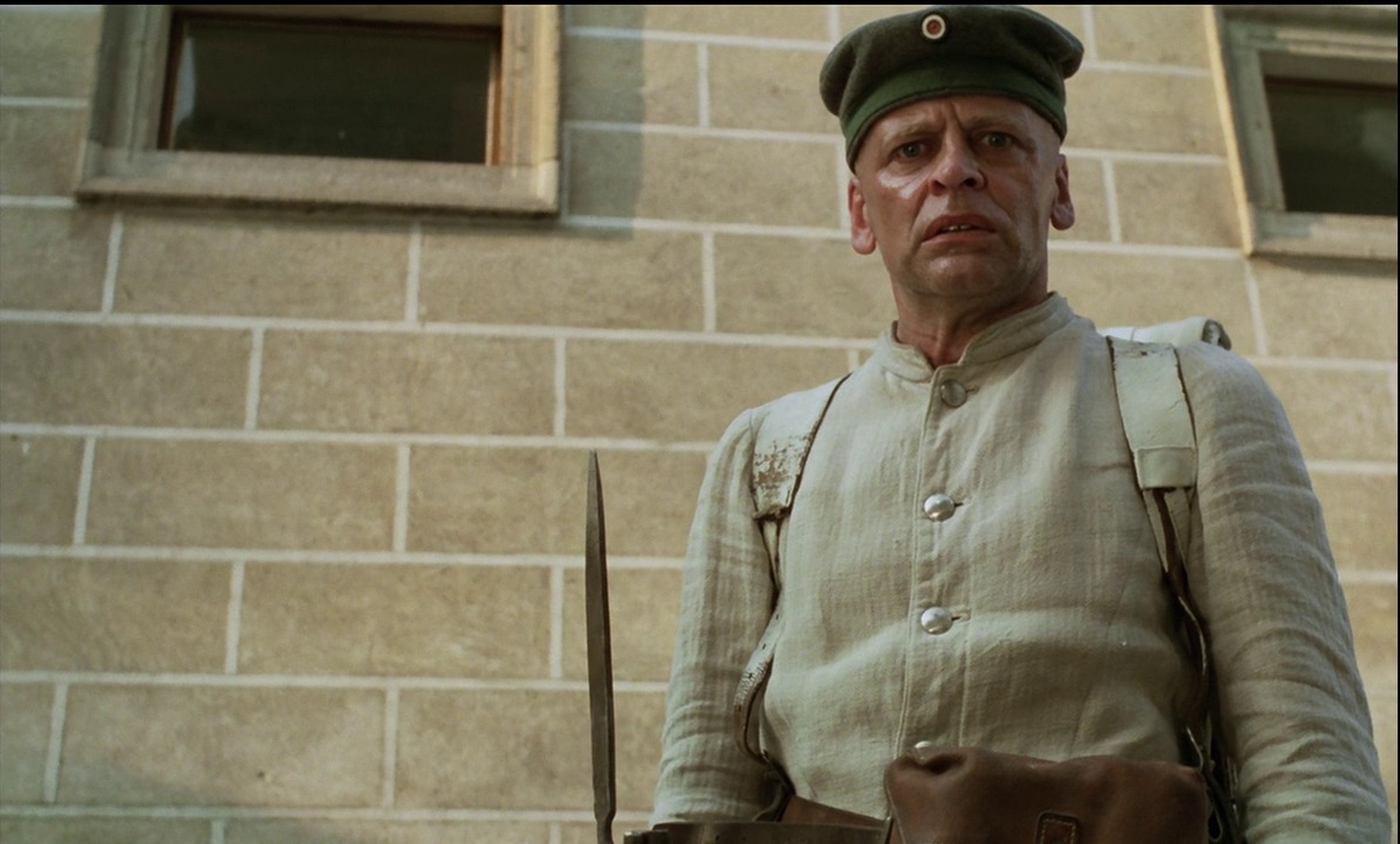
Not your default Hollywood schlop. It also has one of the best cinema duos: Kinski with Werner Herzog, which is always a treat. The dialogue is very poetic. It almost feels more like a play than a movie, with the dialogue, the actors occasionally glancing into the camera, and so on. 7/10
The earth is hot as hell, I’m as cold as ice. Hell is hold. Fine day, Captain. Look at that nice, solid, grey sky. You could drive a peg and hang yourself. All because of a little question of yes, and then yes and no. Captain, did the no cause the yes or the yes the no?
Edit: I had a lot of unanswered questions about this movie. When you watch a film that tries to be more than mere entertainment, you need to constantly ask yourself why the author or director included each element. In works like this, nothing is accidental. I found myself wondering: What was the barber scene about? What was that thing that haunted our protagonist? What did the horse signify? And many other questions.
I have now read a compelling interpretation by Literariness that illuminates many of my questions. Here’s a short summary: the film revolves around two intertwined themes, nature and virtue, and how they relate.
In two key scenes, Woyzeck is accused of immorality. First, in the barber scene, his commanding officer tells him that wanting a child out of wedlock is immoral. Second, the doctor chastises him for urinating in the street. In both cases, Woyzeck’s response is similar: he attributes his actions to nature. In the first instance, he adds that if he were a gentleman like his commander, he would strive to be virtuous; in the second, he simply says it is in his nature. The doctor responds with
“What has Nature to do with it? Did I or did I not prove to you that the musculus constrictor vesicae is controlled by your will? Nature! Woyzeck, man is free! In Mankind alone we see glorified the individual’s will to freedom! And you couldn’t hold your water!”
Here, the film contrasts virtue as a societal expectation with the inevitability of human nature. Woyzeck, a poor and oppressed man, simply doesn’t have the luxury to consciously cultivate virtue; he is preoccupied with survival. Virtue, in this sense, is a luxury he cannot afford, and his “immoral” actions are framed as natural consequences.
Nature itself is also a recurring motif. One of the opening scenes shows Woyzeck in the forest with his companion, hearing noises and seeing strange things. This scene establishes two things:
- Woyzeck has mental instability.
- Nature, both the environment and Woyzeck’s perception of it, mirrors his inner state.
This idea intensifies in the horse scene:
“This is no dumb animal. This is a person! A human being! A human brute! But still an animal. A beast [The horse conducts itself indecently]. That’s right, put society to shame. As you can see, this animal is still in a state of nature. Not ideal nature, of course! Take a lesson from him! . . . What we have been told by this is: Man must be natural! You are created of dust, sand and dung. Why must you be more than dust, sand and dung? Look there, at his reason. He can figure even if he can’t count it off on his fingers. And why? Because he cannot express himself, can’t explain. A metamorphosed human being.”
Here, the horse represents Woyzeck’s essence: natural, instinctual, and unrefined. The other humans around him, shaped by society, behave according to rules, appearances, and learned “virtue,” but Woyzeck’s actions spring from instinct and necessity.
If I were to summarize the film’s message in one or two sentences:
- Virtue is a luxury that the poor, struggling to survive, cannot afford.
- Human nature is partly non-virtuous; immorality is not a moral failing but an inherent part of existence.